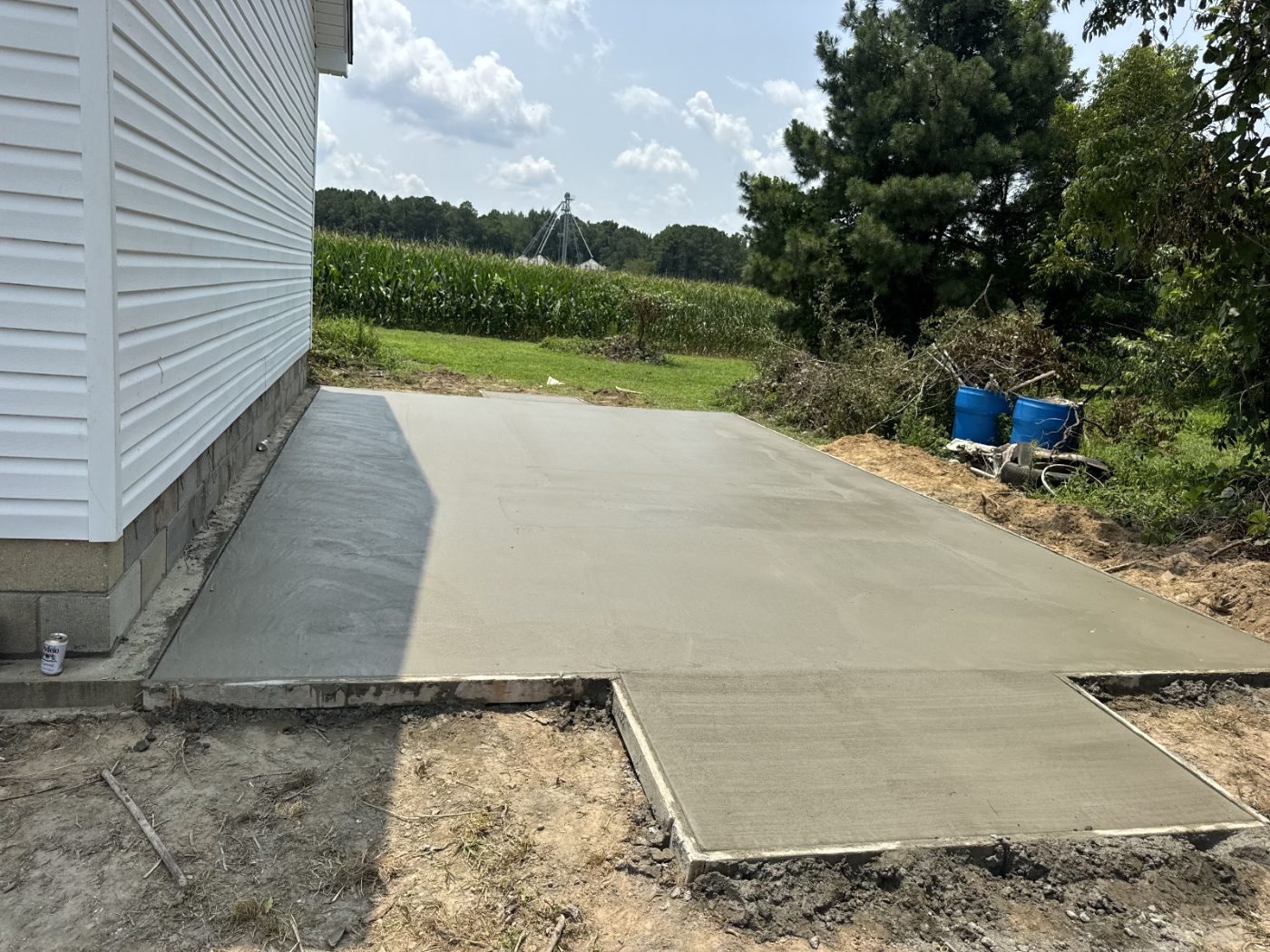
Concrete does not dry. It cures, which is a chemical reaction that keeps going long after the surface feels hard. That is why the slab you could walk across on Tuesday will still crack if you park a loaded truck on it Thursday.
- 124 to 48 hours — foot traffic
Walk on it carefully. No bikes, no pets running on it, nothing dragged across the surface. Keep forms and barricades up.
- 27 days — passenger vehicles
Cars and light pickups are fine at about a week in normal weather. Park straight in and out; avoid turning the wheel while stopped, which grinds a fresh surface.
- 328 days — full design strength
Heavy trucks, dumpsters, RVs, equipment and moving vans wait for the 28-day mark. This is when the slab reaches the strength it was designed for.
Cold and heat move these dates
Curing slows in the cold. A pour placed during a week of forty-degree nights gains strength more slowly than the same pour in May, and we push the drive-on date accordingly. Heat is the opposite problem: in July the surface can set faster than the slab below it, which is why we wet-cure or apply a curing compound and why we start early on hot days.
What to do in the first month
- Keep the surface damp for the first several days if we tell you to, or leave the curing compound alone if we applied one
- No deicing salt in the first winter, and avoid it after that if you can — it accelerates surface spalling
- Do not seal a fresh slab too early; wait the interval we give you
- Keep loads off the outer edges and corners, which are the weakest part of any slab