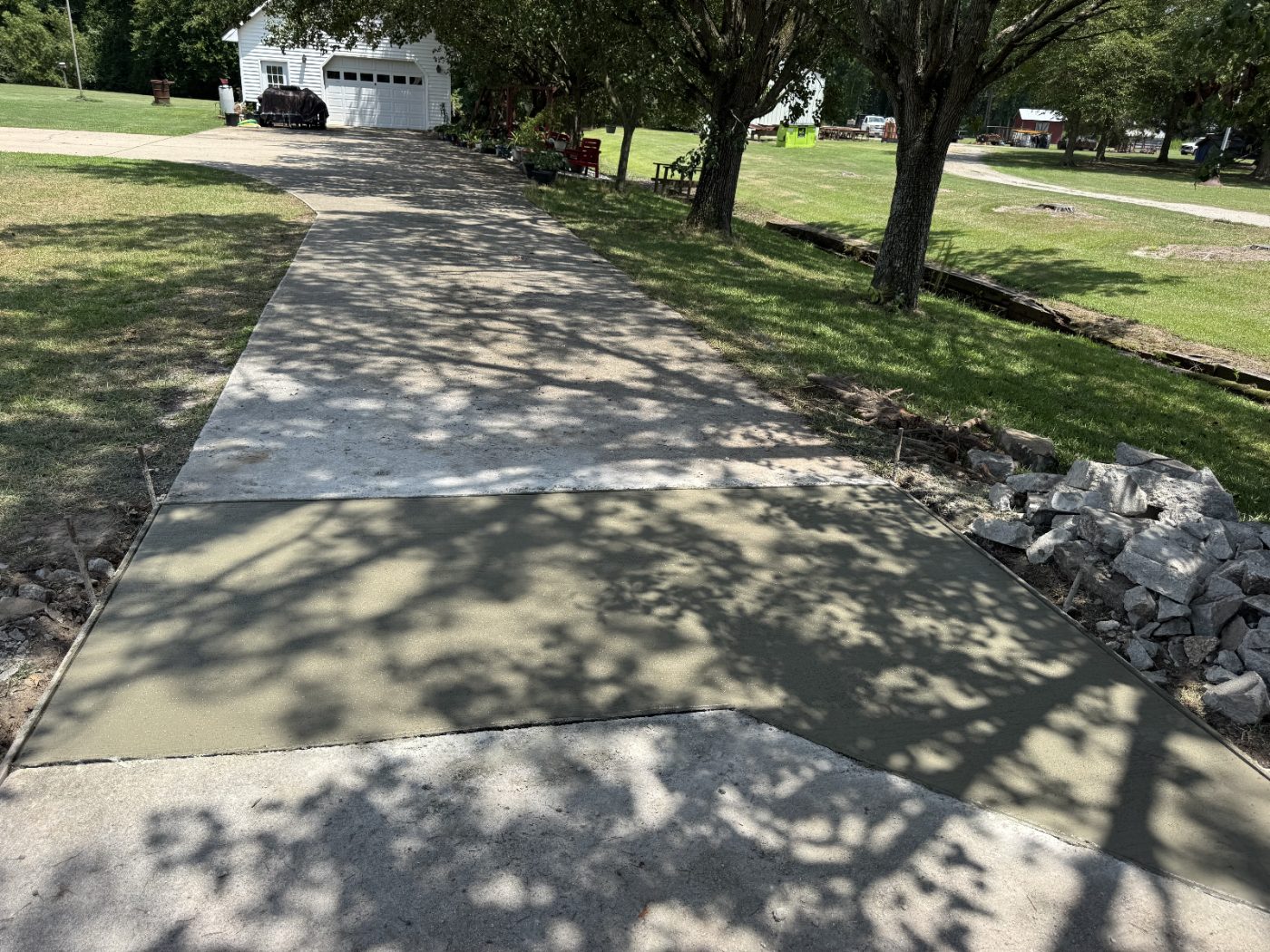
The honest answer to "can you just patch it" depends on whether the concrete failed or the ground under the concrete failed. Patching a slab whose base has washed out buys you a season. So the first thing we do on a repair call is figure out which problem is in front of us, and we will tell you even when the answer costs us the bigger job.
Signs a repair will hold
- Hairline shrinkage cracks with no height difference across them
- Surface scaling or spalling on an otherwise flat, sound slab
- A chipped edge, a damaged corner or one bad control joint
- Worn or stained decorative work where the slab beneath is intact
Signs you are replacing
- One side of a crack sits higher than the other — the sections have moved independently
- Panels rock or tip under weight, or you can hear a hollow sound when tapped
- Water ponds in the middle of a slab that used to drain
- Cracks that keep widening season to season, or reappear after a previous patch
- Visible voids or washed-out soil at the slab edge
Why the cause matters more than the crack
Concrete moves for a handful of reasons: shrinkage as it cures, thermal expansion, load it was not sized for, tree roots, and loss of support underneath. Only the last one gets worse on its own, and it is the most common one we find in this part of the state, because our soils hold water and water moves fines out from under a slab over time. Fixing the surface without fixing the drainage is the definition of a temporary repair.
The middle option
Sometimes a slab is sound but sitting low or settled at one end. Lifting it back to level costs less than replacement and is worth asking about before you commit to a tear-out. It only works when the concrete itself is still in one structurally sound piece.