Concrete Parking Lots in Wilson, NC
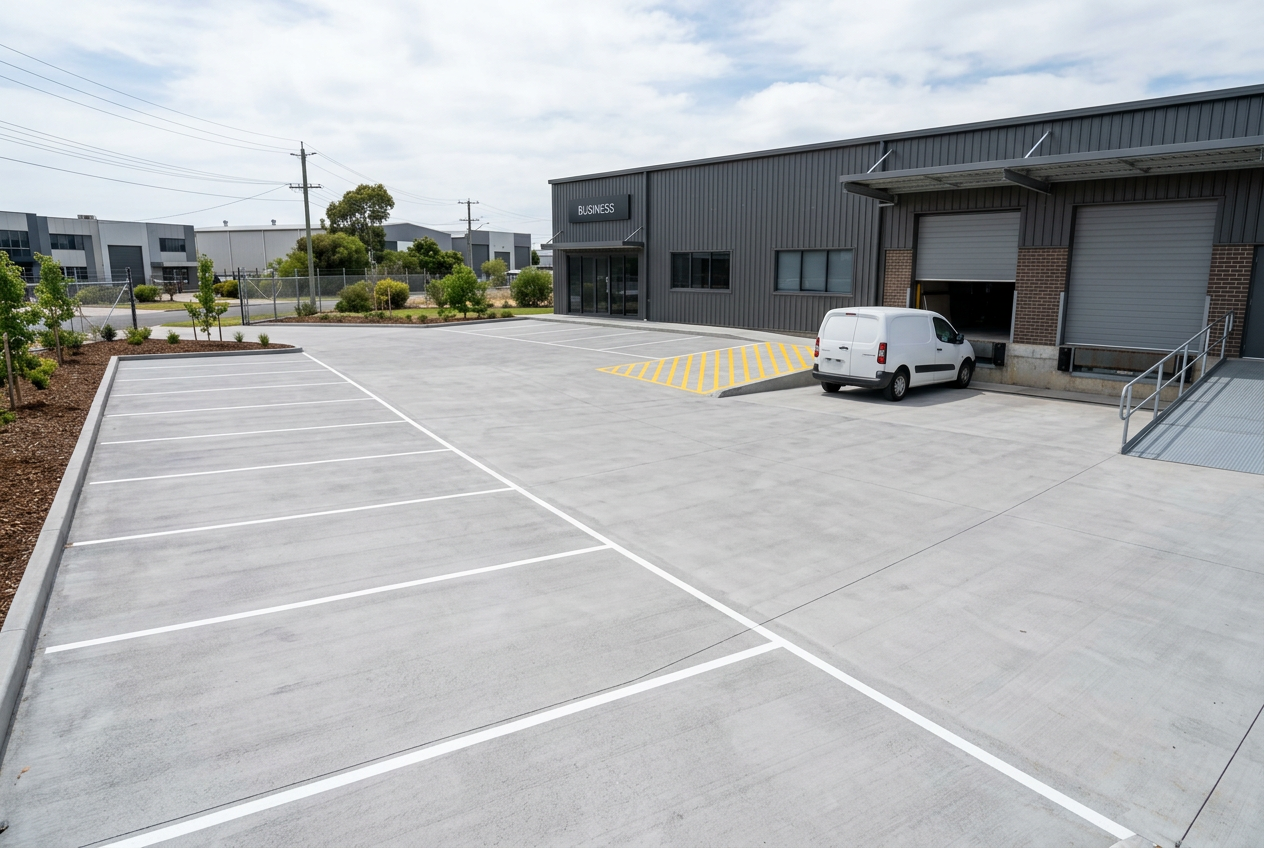
Commercial concrete is a durability and drainage problem before it is a paving problem. Lots have to carry delivery trucks and dumpster trucks at the worst spots, drain in a sheet without ponding, meet ADA on the accessible route, and be built in phases that keep the business open. We build them that way.
Built for the truck loads, jointed for the long run
The load is not the cars. It is the delivery trucks, the trash truck lifting a loaded container, and the fire lane. Those spots get thickened sections and heavier steel, and the dumpster pad gets designed as its own reinforced slab rather than as part of the field pour.
The other half is drainage and joints. Water has to leave a lot in a sheet with no ponding at the curb line or the entrance, and the joint layout has to match the pour sequence and the panel geometry so cracks land in lines instead of across stalls. We plan both before mobilizing.
- Subgrade proof rolled and stabilized where soft
- Aggregate base compacted and tested to depth
- Thickened, heavily reinforced dumpster and truck pads
- Sheet drainage with no ponding at curbs or entrances
- Jointing laid out to panel geometry and pour sequence
- ADA stalls, access aisles and route slopes verified
Everything a commercial pour takes
Site prep through striping-ready surface, phased to keep you operating.
Demolition and removal
Existing asphalt or concrete removed, loaded and hauled off, with the work zone fenced and signed.
Subgrade and base
Subgrade proof rolled, soft areas undercut and stabilized, then aggregate base placed and compacted to depth.
Reinforcement and thickness
Steel and slab thickness varied by zone, with heavier sections in truck lanes, at the entrance and under dumpsters.
Grading and drainage
Grades set for sheet flow, catch basins and inlets tied in, and curb and gutter poured where the plan calls for it.
ADA compliance
Accessible stalls, access aisles, curb ramps and route slopes built and checked against the requirement, not assumed.
Phasing and access
Work sequenced in sections with traffic control so customers and deliveries keep moving while we pour.
How we build your concrete parking lot
Site walk and estimate
We walk the lot with you, review plans and traffic patterns, identify truck and dumpster zones, then price it in writing.
Demo and subgrade
Existing surface removed and hauled, subgrade proof rolled, soft spots undercut, base placed and compacted.
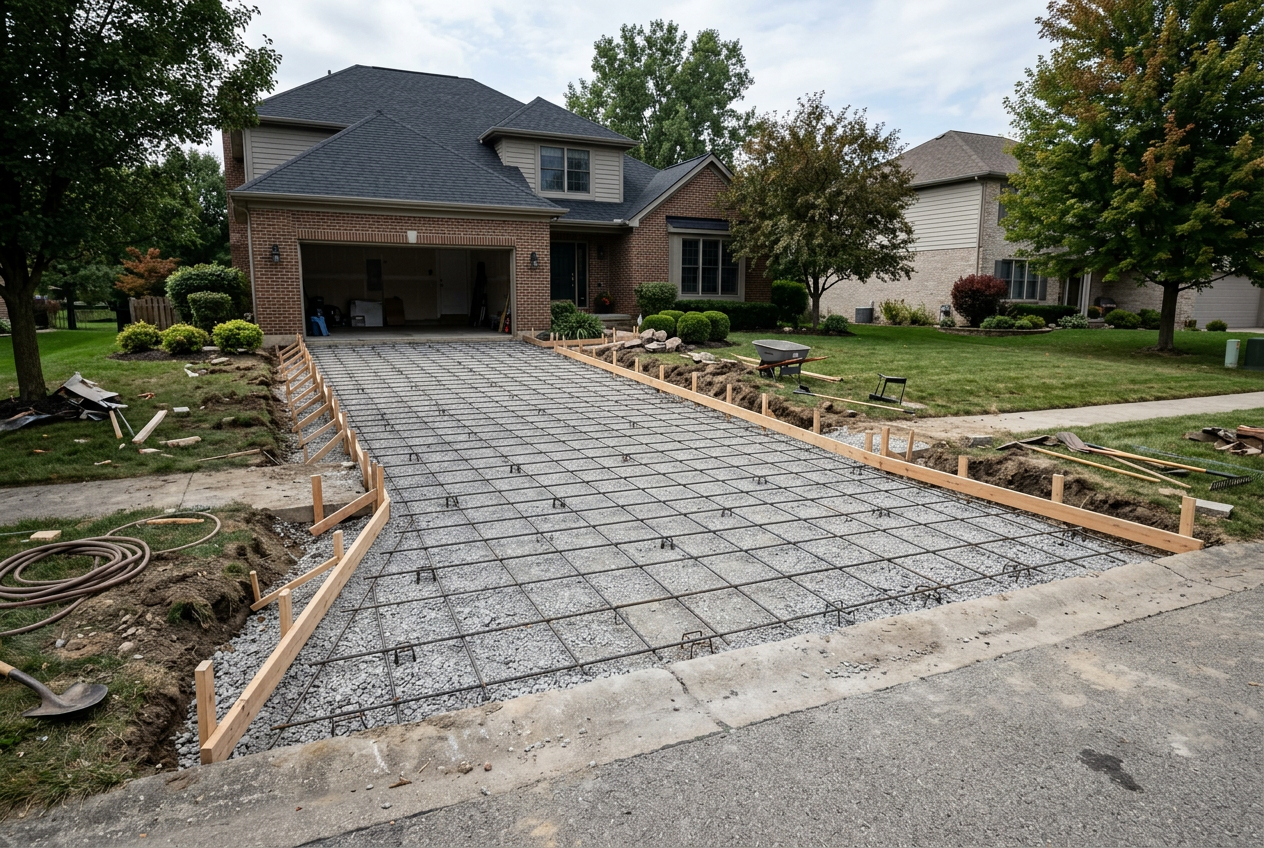
Forms, steel, drainage
Forms and grades set for sheet flow, structures tied in, reinforcement placed by zone, joint layout marked.
Pour by phase
Placed and finished section by section, joints cut on schedule, then opened to traffic in stages as it cures.
Where concrete is the better commercial surface
Asphalt is cheaper going in. These are the places concrete wins on total cost.
Dumpster pads
A trash truck lifting a loaded container concentrates enormous load in one spot. Asphalt ruts and shoves there within a season.
Truck and loading lanes
Delivery lanes and dock approaches take slow, heavy, turning loads, which is exactly what pushes asphalt into waves.
Drive-through and queue lanes
Standing vehicles on hot asphalt leave permanent depressions. Concrete does not soften in a July afternoon.
Areas that stay wet
Where water sits or a downspout discharges, concrete holds up and asphalt unravels from the edges.
Long-hold properties
If you plan to own the property for decades, a concrete lot outlasts multiple asphalt overlays and seal coats.
Lots you want to look bright
A light concrete surface reflects lighting, which means better visibility at night with fewer fixtures running.
Why lots crack up early around here
Subgrade first. On the coastal plain a lot can cross sandy loam, clay and old fill in a hundred feet. Without proof rolling and undercutting the soft areas, you get differential settlement, and in a large slab that means cracked panels across the drive lanes within a couple of years.
Then the load map. Lots that get poured at a single uniform thickness fail exactly where the heavy wheel loads are: the entrance, the truck lane and the dumpster approach. Thickening and reinforcing those zones costs little at construction and is the difference between a lot that lasts and one that gets patched forever.
Jointing and drainage finish the list. Joints cut late, spaced too far apart or laid out without regard to the panel shape put cracks where nobody wants them. Grades that pond water at a curb line or an inlet keep the base saturated and undermine the panel edges.
What moves the price of a concrete lot
Commercial work is priced off the plan, the dirt and the schedule.
Area, thickness and zones
Square footage times thickness sets the base cost, and the number of thickened truck, entrance and dumpster zones adjusts it upward.
Subgrade condition
Undercutting soft soil, importing and compacting stone, or stabilizing a wet subgrade is the biggest variable on most sites.
Drainage and structures
Catch basins, inlets, piping, curb and gutter and any regrading to fix ponding are priced as their own scope.
Phasing and hours
Keeping a business open means working in sections, and night or weekend pours to avoid disrupting operations carry a premium.
We price commercial work off drawings when you have them and off a measured site walk when you do not, with thickness by zone, base depth, reinforcement and the phasing plan written into the proposal.
What customers say about our concrete parking lots
Why Wilson County calls us for concrete parking lots
Phased around your business
Work is sequenced in sections with traffic control so you stay open, including weekend and off-hours pours.
Built to the load map
Thickness and reinforcement vary by zone, because the trash truck and the front row of parking are not the same problem.
Licensed and insured
Certificates and insurance documentation provided for your file before mobilization.
Where we pour concrete parking lots
Based in Wilson, NC and working the counties around it. If your town is not on the list, ask and we will tell you straight whether we can get a crew to it.
Everything else we pour and repair
Same crew, same standard, whether it is a shed slab or a parking lot.
 Concrete DrivewaysNew driveways, extensions and aprons formed, reinforced and finished to carry daily traffic.View service
 Concrete PatiosPatios and extensions poured flat, drained away from the house and finished to spec.View service
 Concrete Sidewalks & WalkwaysFront walks, side paths and connectors laid out straight with joints cut before they crack.View service
 Stamped & Decorative ConcreteStamped patterns and integral or broadcast color, picked from real samples at the estimate.View service
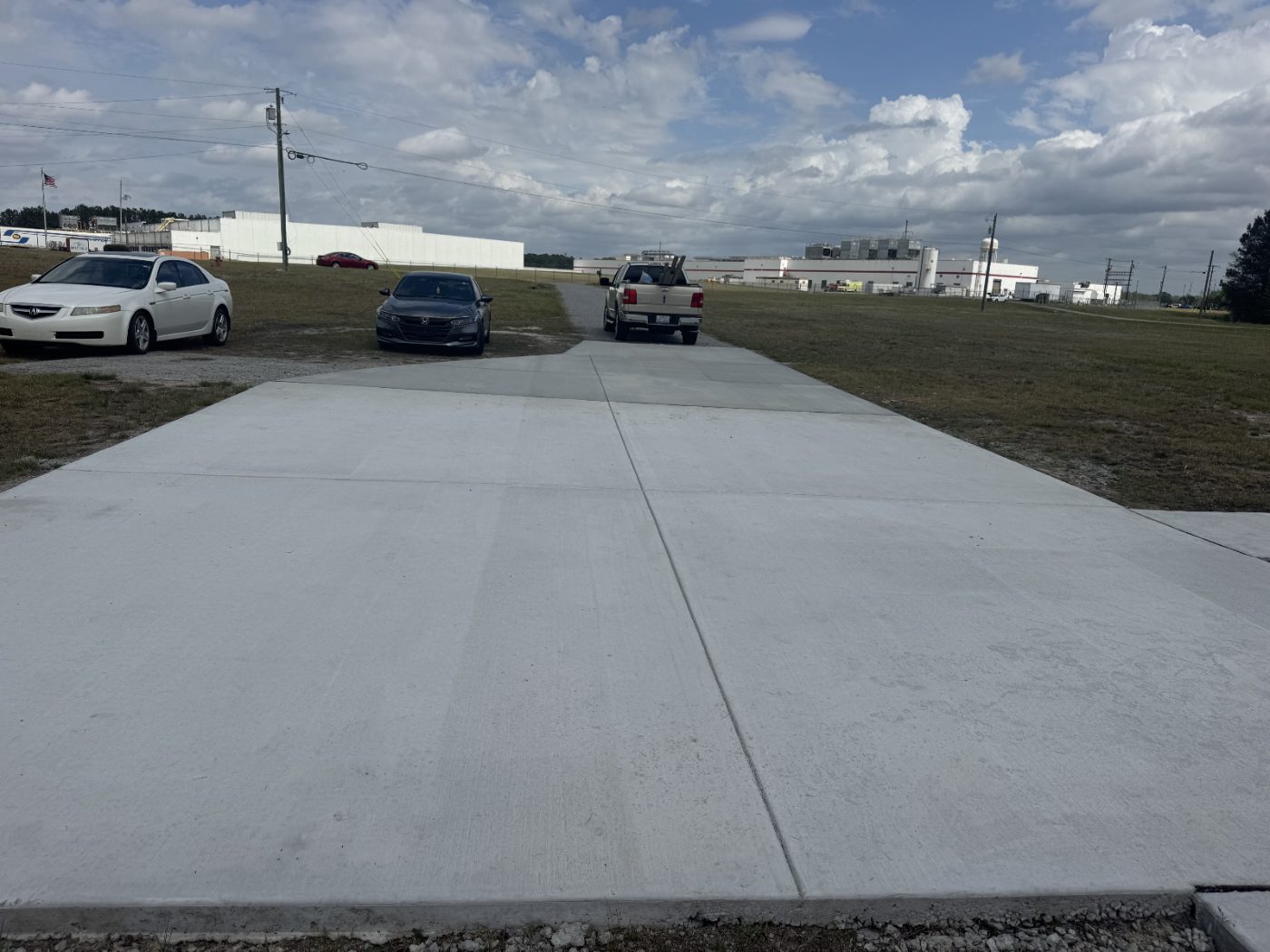 Concrete Foundations & SlabsFootings, foundations and slabs on grade over a compacted stone base, with steel sized to the load.View service
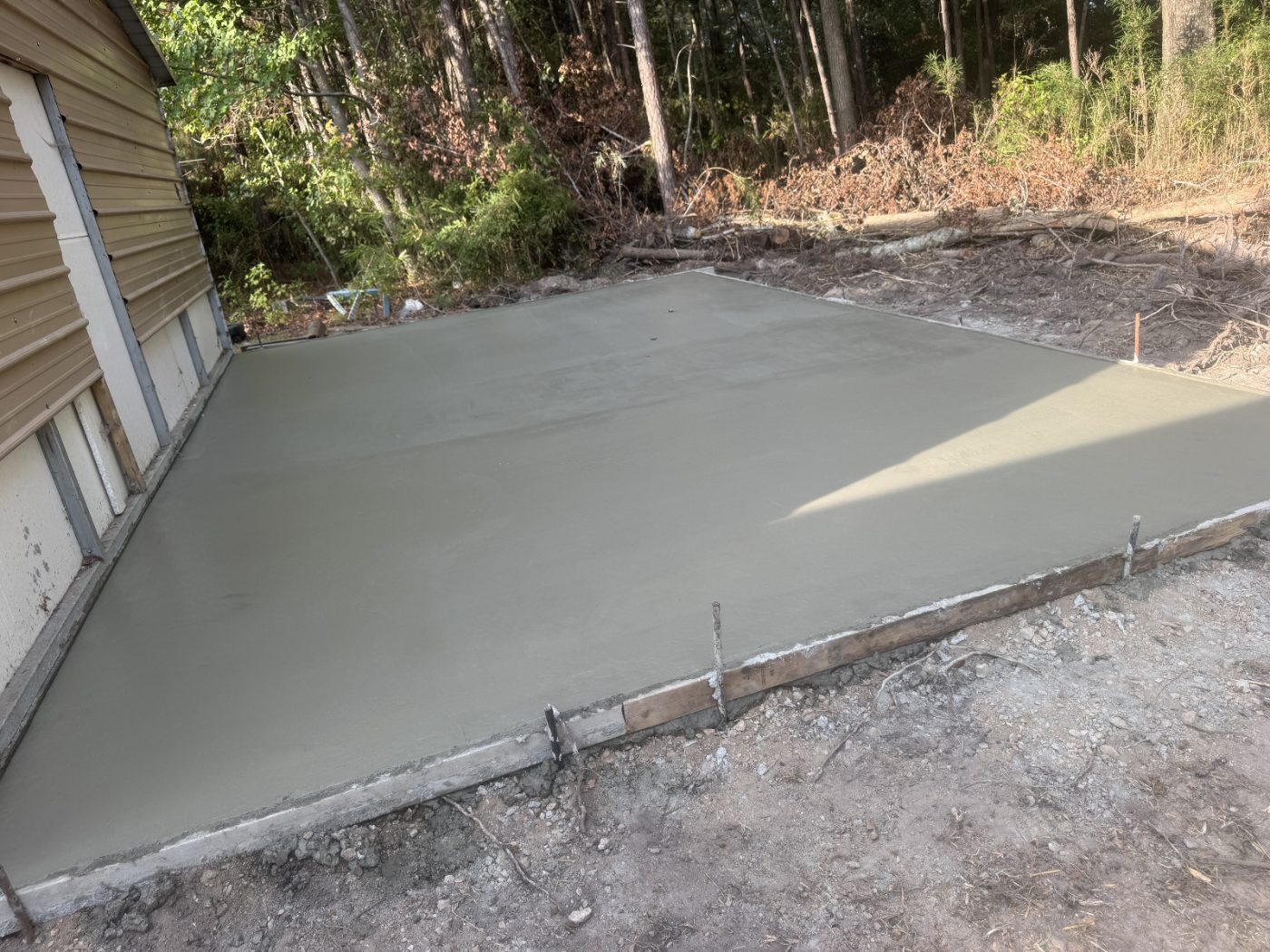 Garage Floor ConcreteGarage slabs poured level to the door, with joints placed to control where movement goes.View service
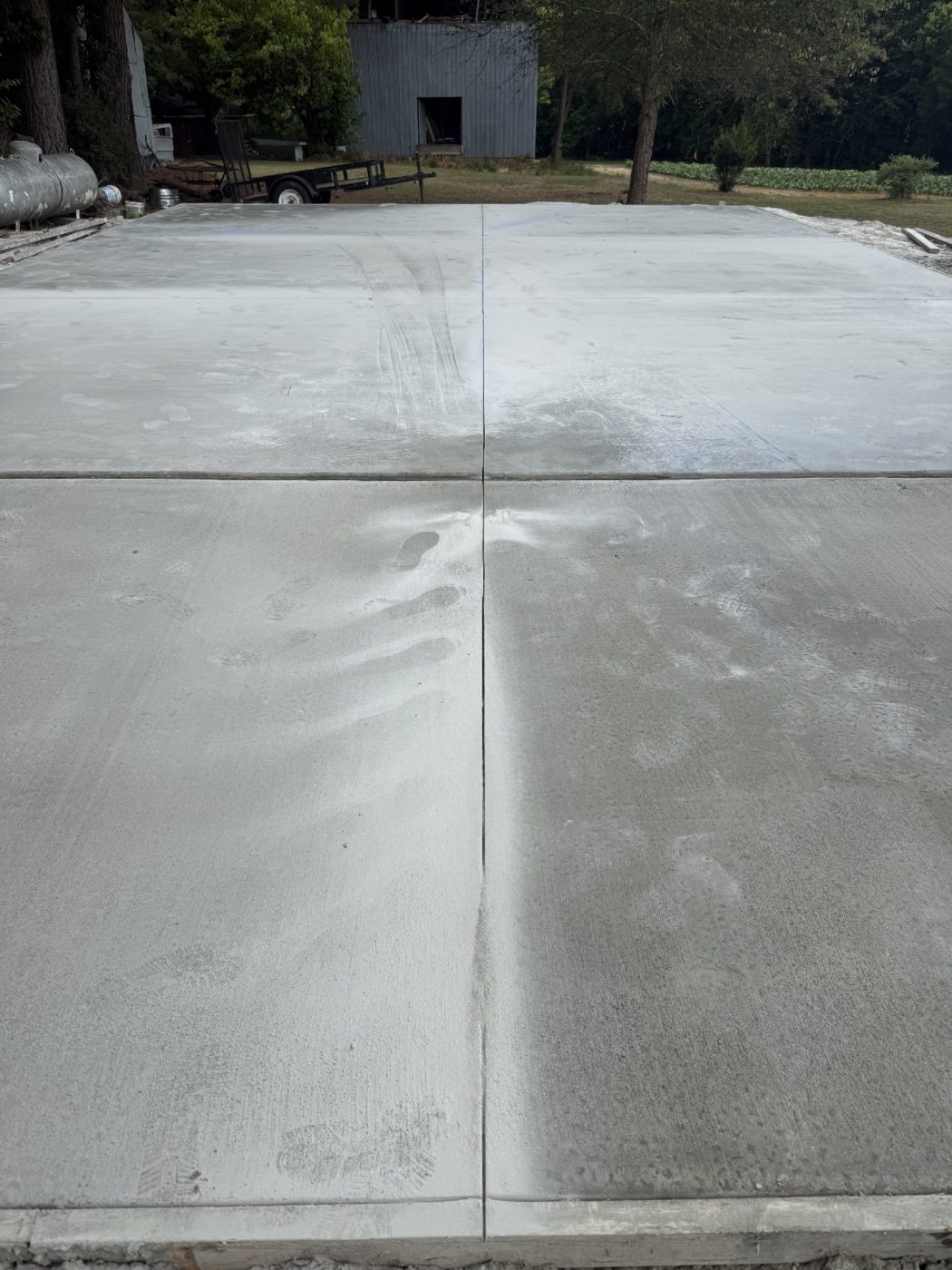 Concrete Floor InstallationInterior floors for shops, additions and outbuildings, screeded flat and finished smooth.View service
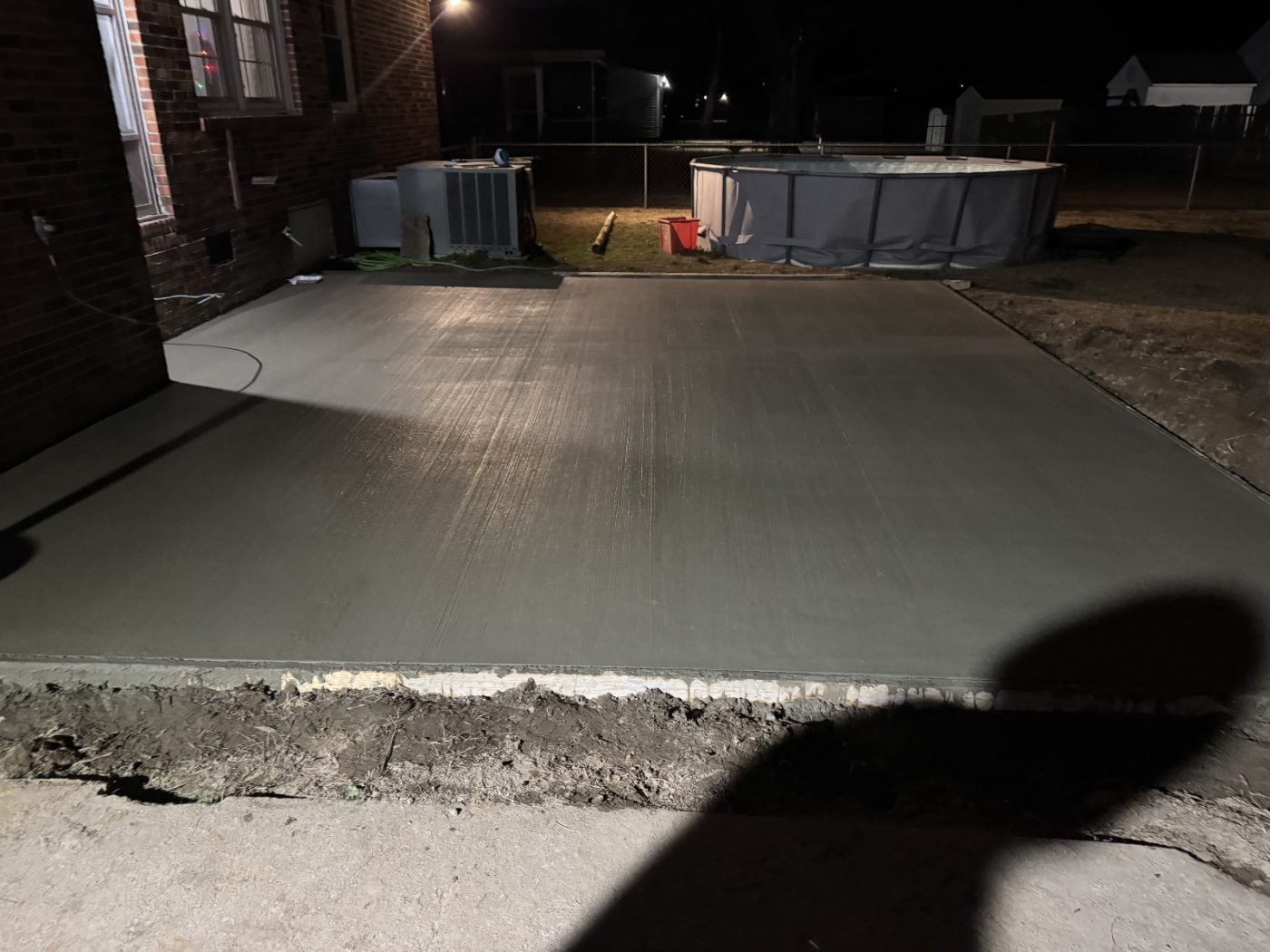 Concrete Pool DecksPool surrounds with slip-resistant finishes and drainage pitched away from the water.View service
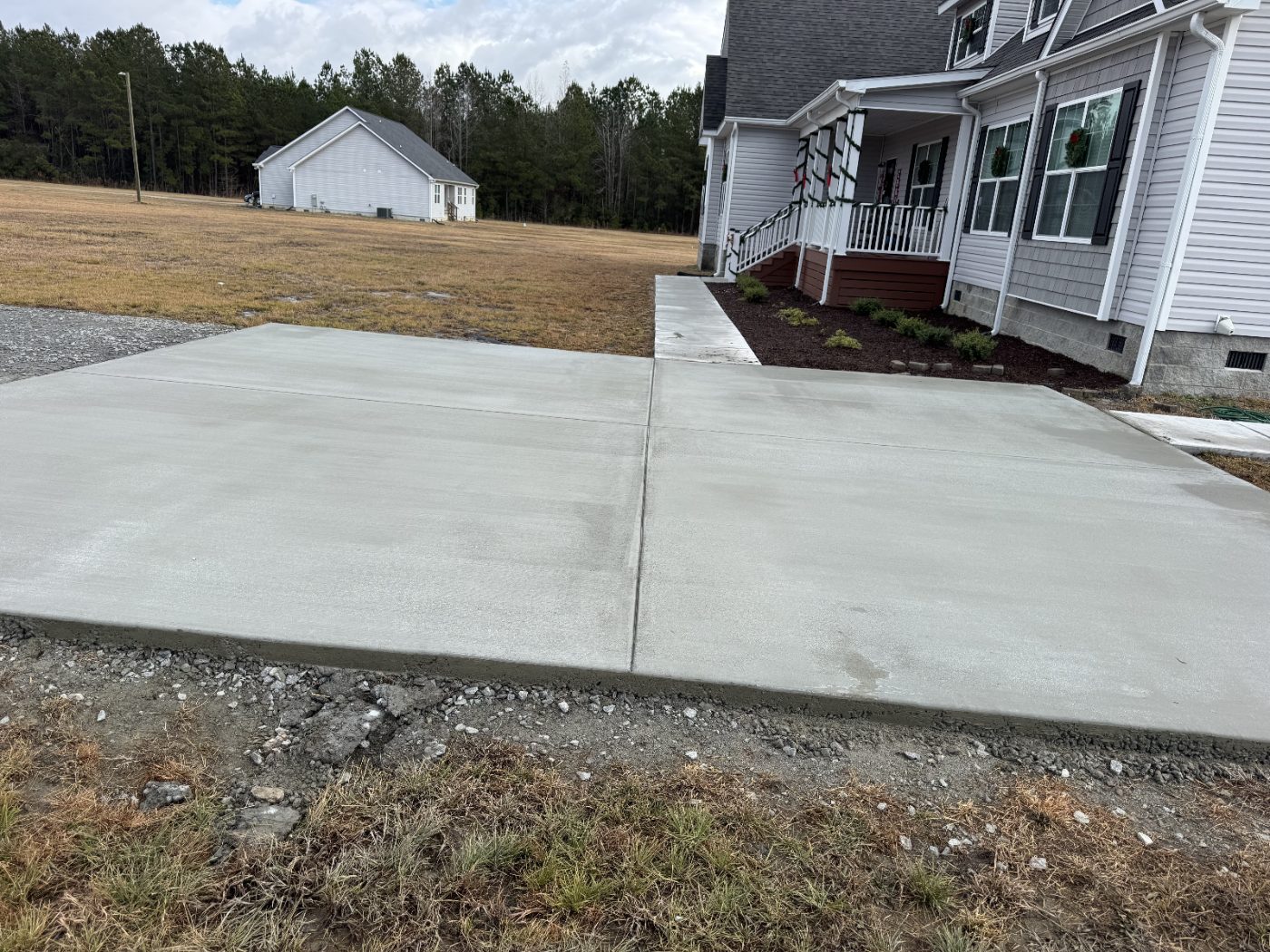 Concrete StepsPoured steps and landings formed to an even rise and run, tied into the walk or the porch.View service
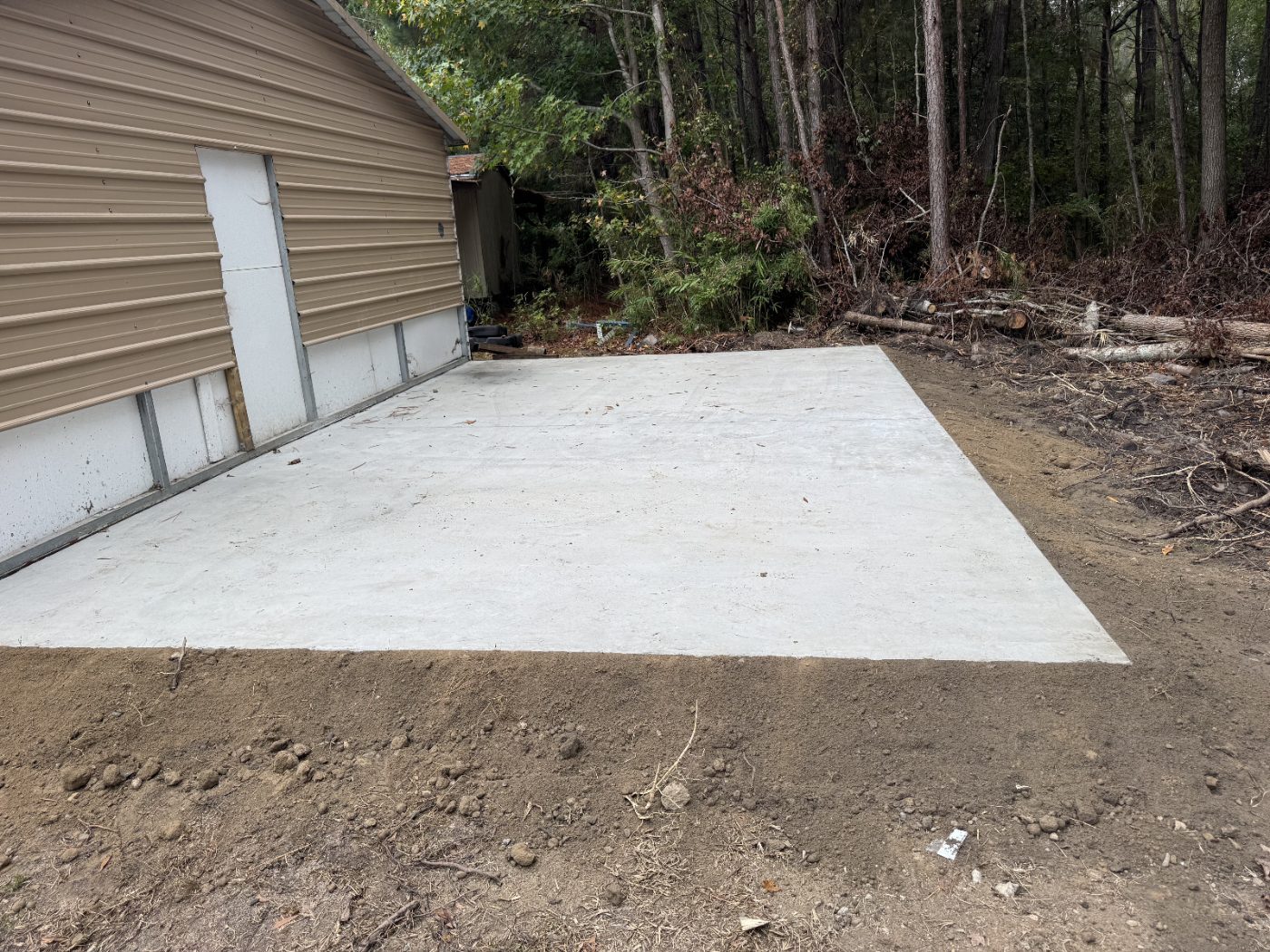 Foundation RaisingSettled foundations and slabs lifted back to level, with the cause addressed before the repair.View service
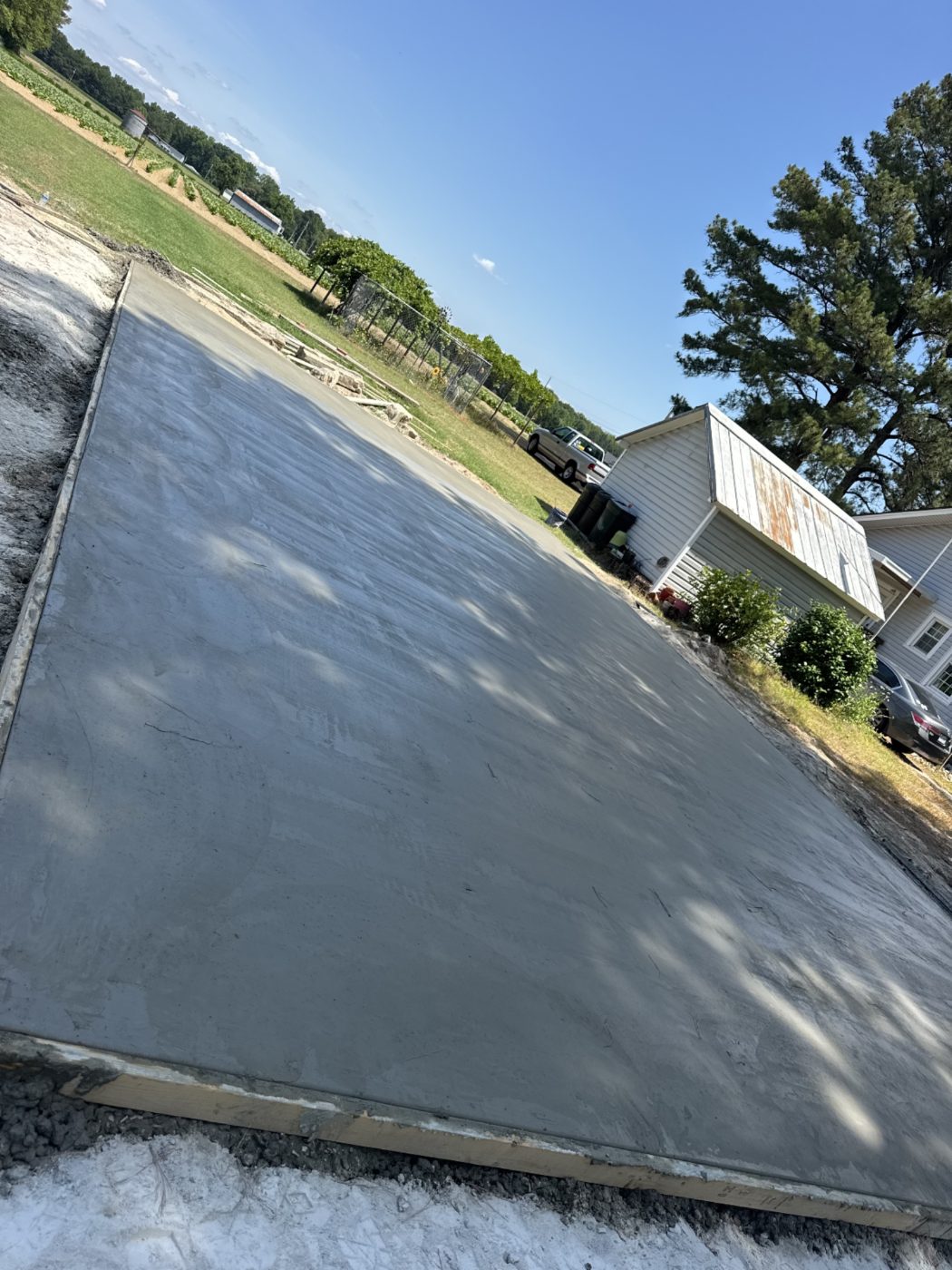 Concrete CuttingSaw cutting and removal for doorways, trenches, plumbing runs and section replacement.View service
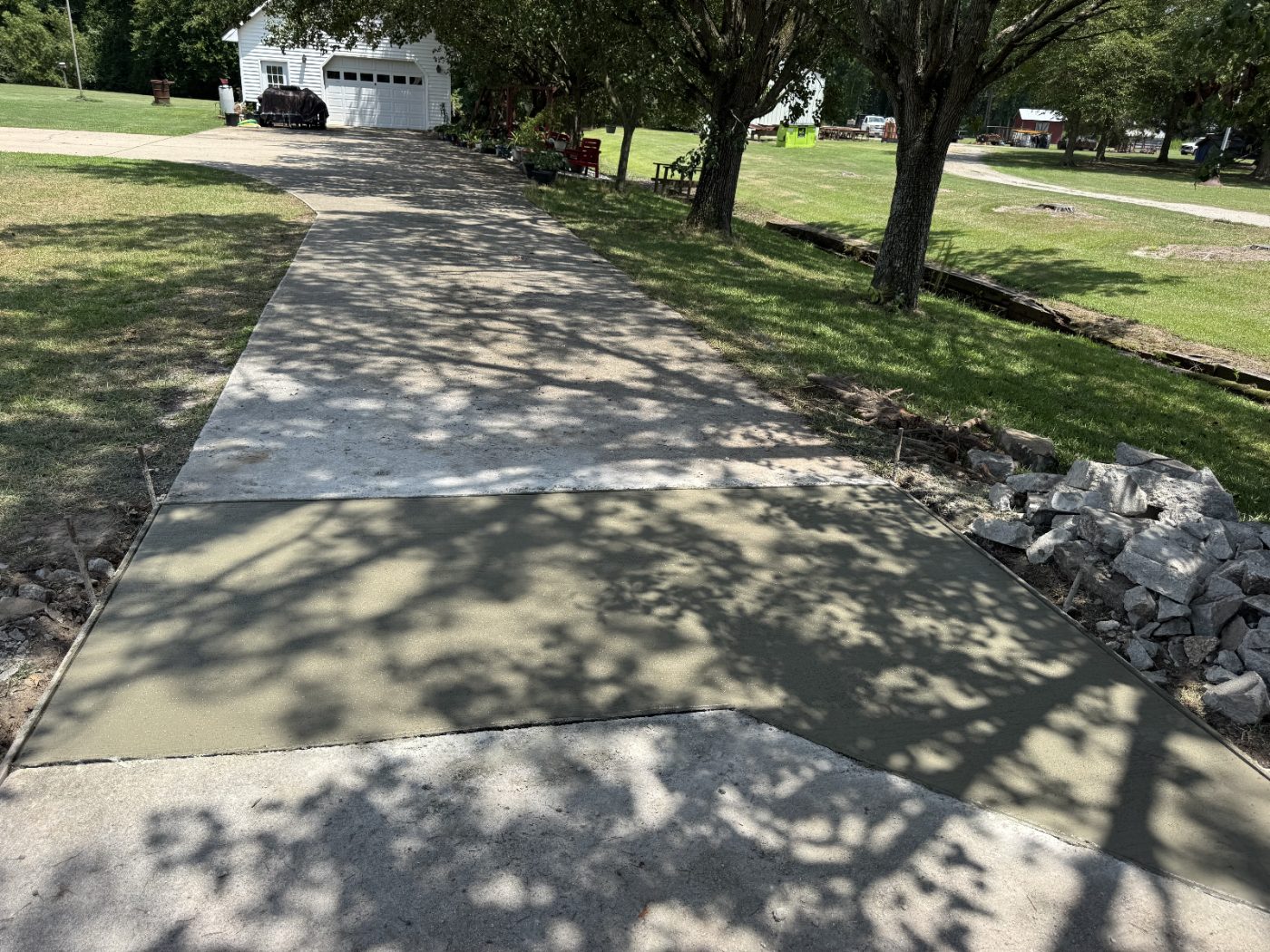 Concrete Repair and ReplacementCracked, settled or spalling concrete assessed first, then repaired or replaced with a reason given.View service
Concrete Parking Lots questions we get in Wilson, NC
Standard car parking areas typically run 5 to 6 inches over a compacted base. Truck lanes, entrances and fire lanes go 6 to 8, and dumpster pads are designed as their own heavily reinforced slab. The soil report and the traffic decide the final numbers.
Ready to price your concrete parking lot in Wilson, NC?
We come out, walk the job, and put the number in writing the same visit. Free, and no obligation.