Foundation Raising in Wilson, NC
A settled foundation is a symptom. Lifting it back without finding out what moved underneath just resets the clock. We look at the soil, the drainage and the crack pattern first, tell you what caused it, then lift and stabilize the structure back toward level and fix the water problem that started it.
Find the cause, then lift, then keep the water away
Settlement has a reason: soft or washed out soil under a footing, poorly compacted fill, a plumbing leak, roots drawing moisture out of clay, or roof and surface water dumped against the foundation for years. Which one it is changes the repair completely, so we identify it before we price anything.
Then the lift. Depending on what is settling and by how much, that is helical or push piers to competent soil under a footing, pressure grouting to fill voids under a slab, or slab jacking to bring a sunken section back to grade. We stage the lift, watch how the structure responds, and stop where the structure wants to stop rather than forcing it.
- Cause diagnosed and explained before a repair is quoted
- Elevations measured across the structure, not eyeballed
- Piers taken to competent bearing soil or bedrock refusal
- Void filling and slab lifting where a footing is sound
- Drainage and downspout corrections included in the plan
- Written scope with pier locations and expected movement
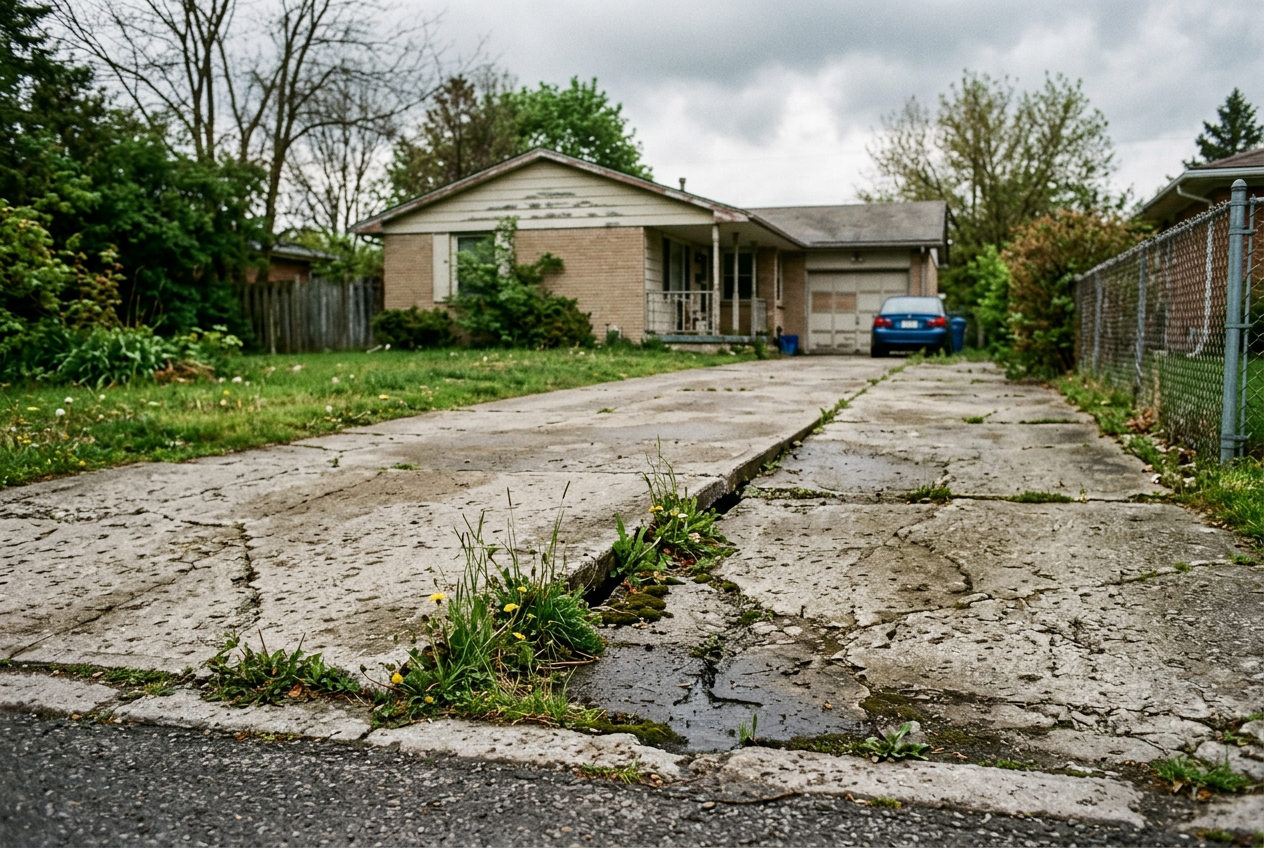
What a settlement repair involves
Diagnosis through backfill, with the plan written down before anything is lifted.
Assessment and elevations
Crack mapping inside and out, elevation readings across the floor and footing, and a look at grade and drainage.
Written repair plan
The cause, the method, pier or injection locations, the expected lift and the limits of what a lift can correct.
Piering
Helical or push piers installed under the footing to competent soil, then the structure transferred onto them.
Slab lifting and void fill
Sunken slabs raised and voids under them filled by injection where the footing itself is stable.
Drainage correction
Downspout extensions, regrading and surface drainage so the soil that failed is not saturated again.
Restoration
Excavations backfilled and compacted, concrete patched where piers went in, and the site cleaned.
How we build your foundation raising
Inspection
We map the cracks, take elevations, check the grade, gutters and any plumbing signs, and tell you what is moving and why.
Repair plan and price
A written scope with the method, the locations, the expected lift and the drainage work, priced before we start.
Lift and stabilize
Piers installed or grout injected, then the structure lifted in stages while we monitor how it responds.
Water and cleanup
Drainage corrected, excavations backfilled and compacted, concrete patched and the site left clean.
Signs your foundation is settling
One of these on its own may be nothing. Two or three together on the same side of the house is a pattern.
Stair-step cracks in block or brick
Diagonal cracking that follows the mortar joints in a stair pattern, usually widening toward the top, is the classic settlement signature.
Doors and windows sticking
Doors that used to close and now bind at a corner, or windows that will not latch, mean the opening is no longer square.
Sloping or bouncy floors
A floor that falls noticeably toward one wall, or a spot that flexes underfoot, points to a footing or pier that has dropped.
Gaps at trim, ceilings and porches
Separation at crown molding, a gap opening between a porch or stoop and the house, or a nail-pop line across drywall.
Cracks in the slab or floor tile
A crack running across a slab floor, or grout and tile cracking in a straight line, often follows movement underneath.
Water against the foundation
Downspouts discharging at the wall, negative grade or a wet crawlspace are the conditions that create settlement in the first place.
Why foundations settle in Eastern North Carolina
Soil moisture change does most of it. Our clays swell when saturated and shrink in a dry August, and that cycle under an edge of a footing is enough to drop it over years. Sandy loam behaves differently: it does not shrink, it washes, and moving water takes the fines out from under a footing and leaves a void.
Fill and construction history matter next. Pads built up to raise a house out of low ground, old creek bottoms filled decades ago, and trenches backfilled without compaction all consolidate under sustained load. A structure sitting partly on native soil and partly on that fill is the textbook setup for differential settlement.
Then trees and plumbing. A mature willow oak can pull thousands of gallons out of the soil in a season, shrinking clay on the side of the house nearest it. A slow supply or drain leak under a slab does the opposite, saturating and softening one area. Both show up as movement in a single corner rather than across the whole structure.
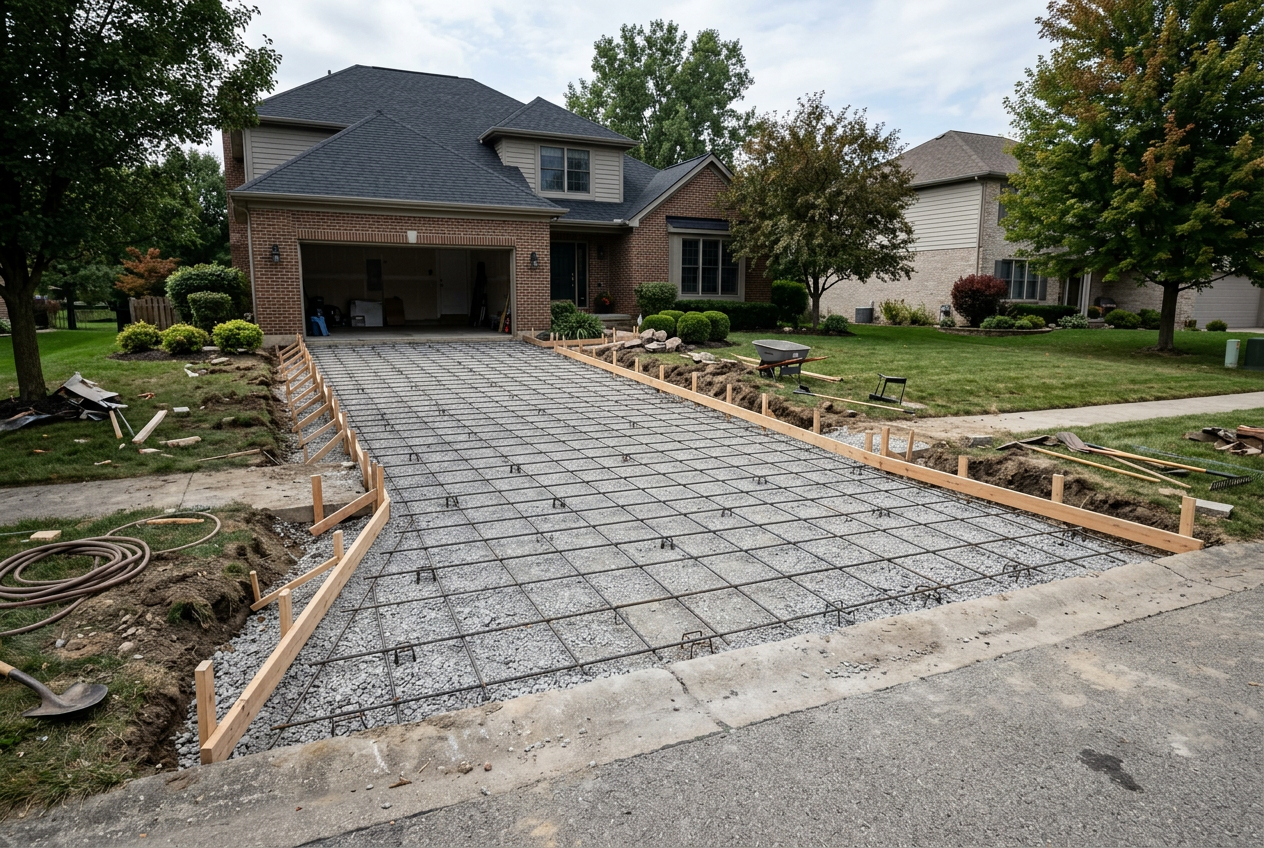
What moves the price of foundation raising
Settlement repair is priced per pier and per condition, so the assessment comes before any number.
Number and depth of piers
Cost follows how many piers the structure needs and how deep each has to go to reach competent soil. Deeper bearing means more sections per pier.
Structure and access
Working in a crawlspace, under a slab, inside a finished room or against a wall with landscaping and utilities all change how the work is done.
Method
Void filling and slab lifting are the least invasive and least expensive. Piering a settled footing is a bigger scope. Some structures need both.
Drainage and site work
Regrading, downspout extensions, a French drain or a sump are usually part of a lasting fix and are priced as their own line.
The assessment is free and the written plan states the cause, the method, the pier locations and honestly what a lift can and cannot correct. If we think you need a structural engineer rather than a contractor, we will say so.
What customers say about our foundation raising
Why Wilson County calls us for foundation raising
Diagnosis before sales
We tell you what is moving and why before we quote a repair, including when the answer is that nothing needs doing yet.
The water gets fixed too
A lift without a drainage correction is a temporary repair, so the plan includes both.
Licensed and insured
Certificates available on request, and we will refer you to a structural engineer when the situation calls for one.
Where we pour foundation raising
Based in Wilson, NC and working the counties around it. If your town is not on the list, ask and we will tell you straight whether we can get a crew to it.
Everything else we pour and repair
Same crew, same standard, whether it is a shed slab or a parking lot.
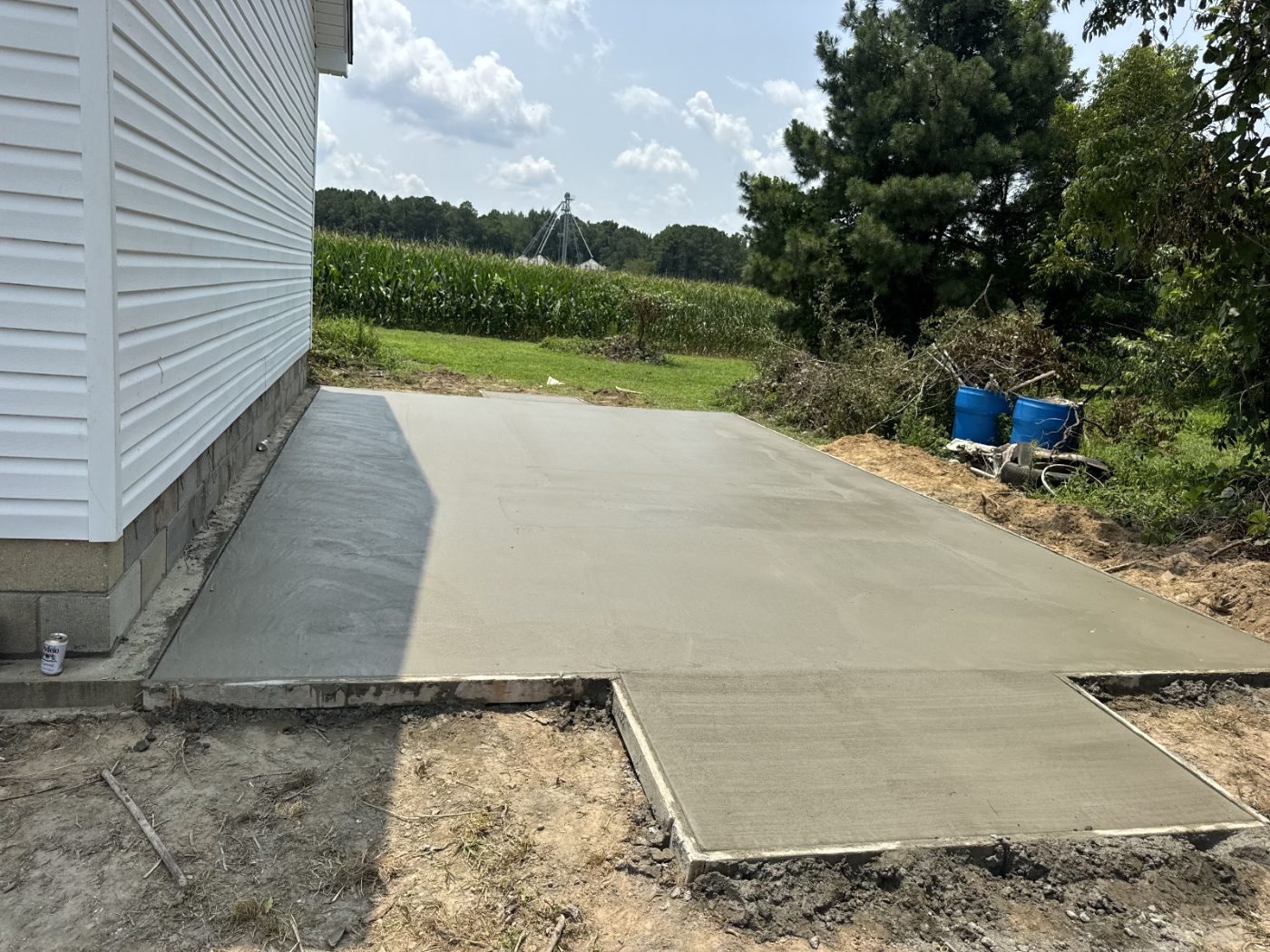 Concrete DrivewaysNew driveways, extensions and aprons formed, reinforced and finished to carry daily traffic.View service
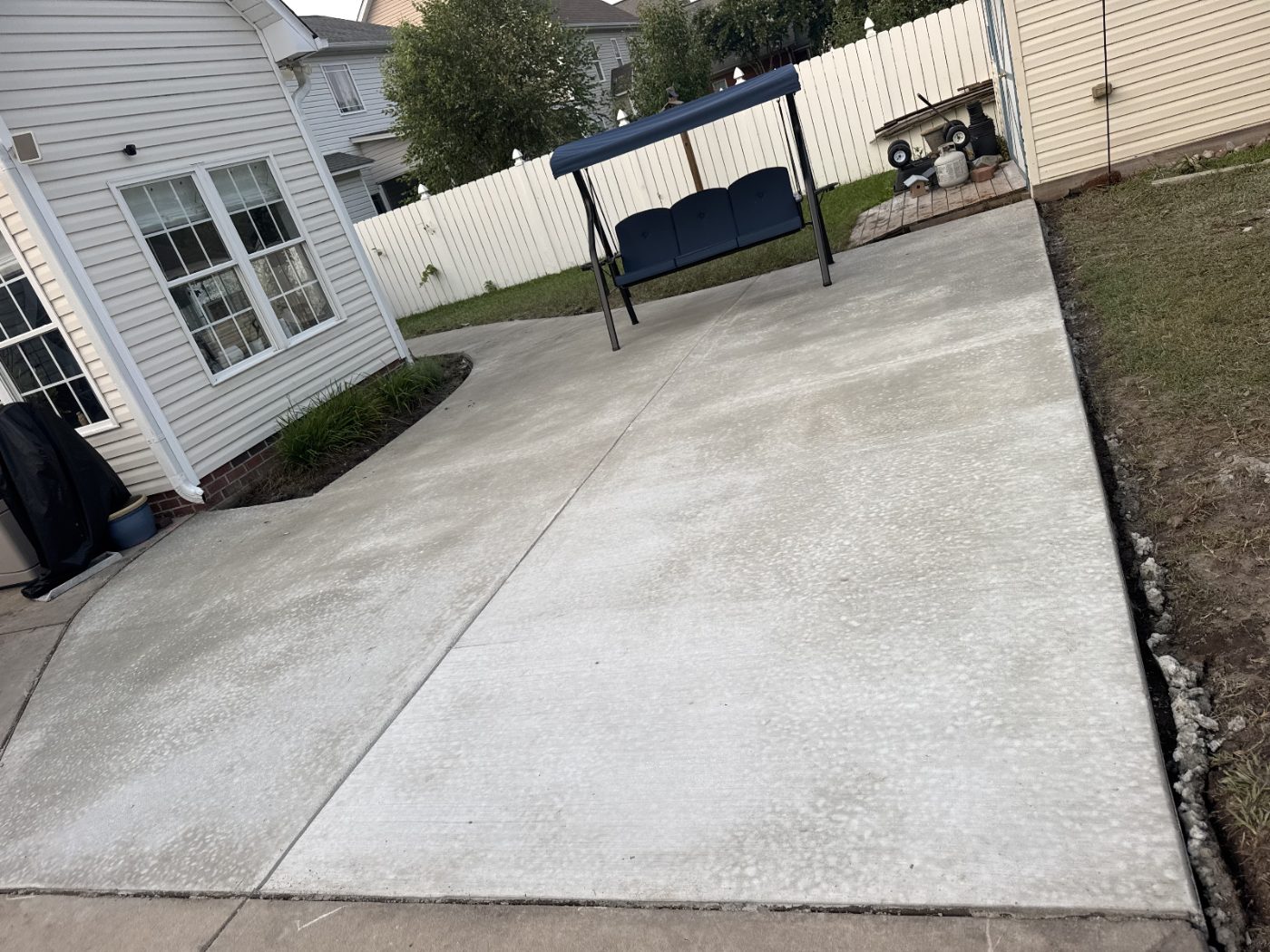 Concrete PatiosPatios and extensions poured flat, drained away from the house and finished to spec.View service
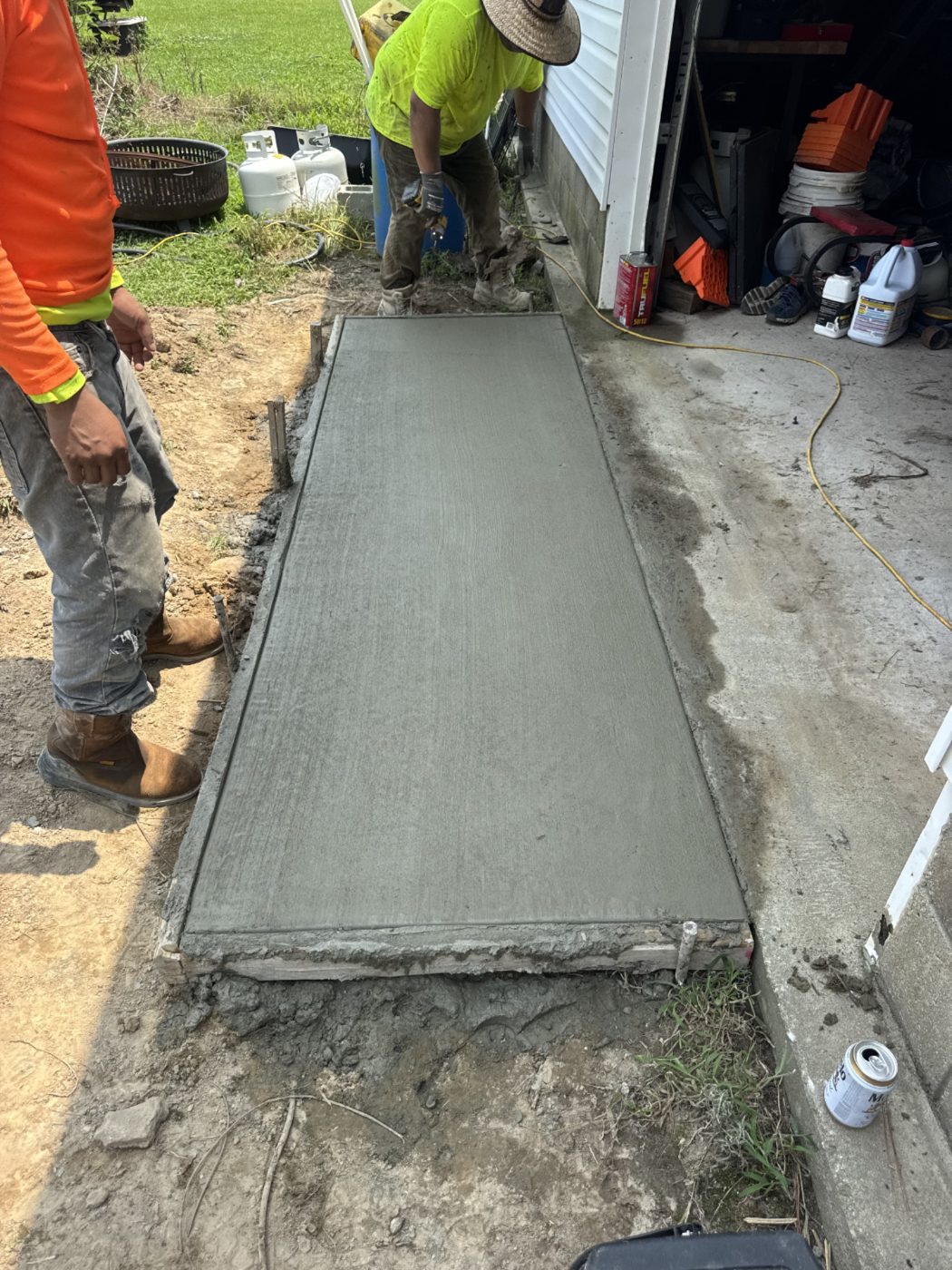 Concrete Sidewalks & WalkwaysFront walks, side paths and connectors laid out straight with joints cut before they crack.View service
 Stamped & Decorative ConcreteStamped patterns and integral or broadcast color, picked from real samples at the estimate.View service
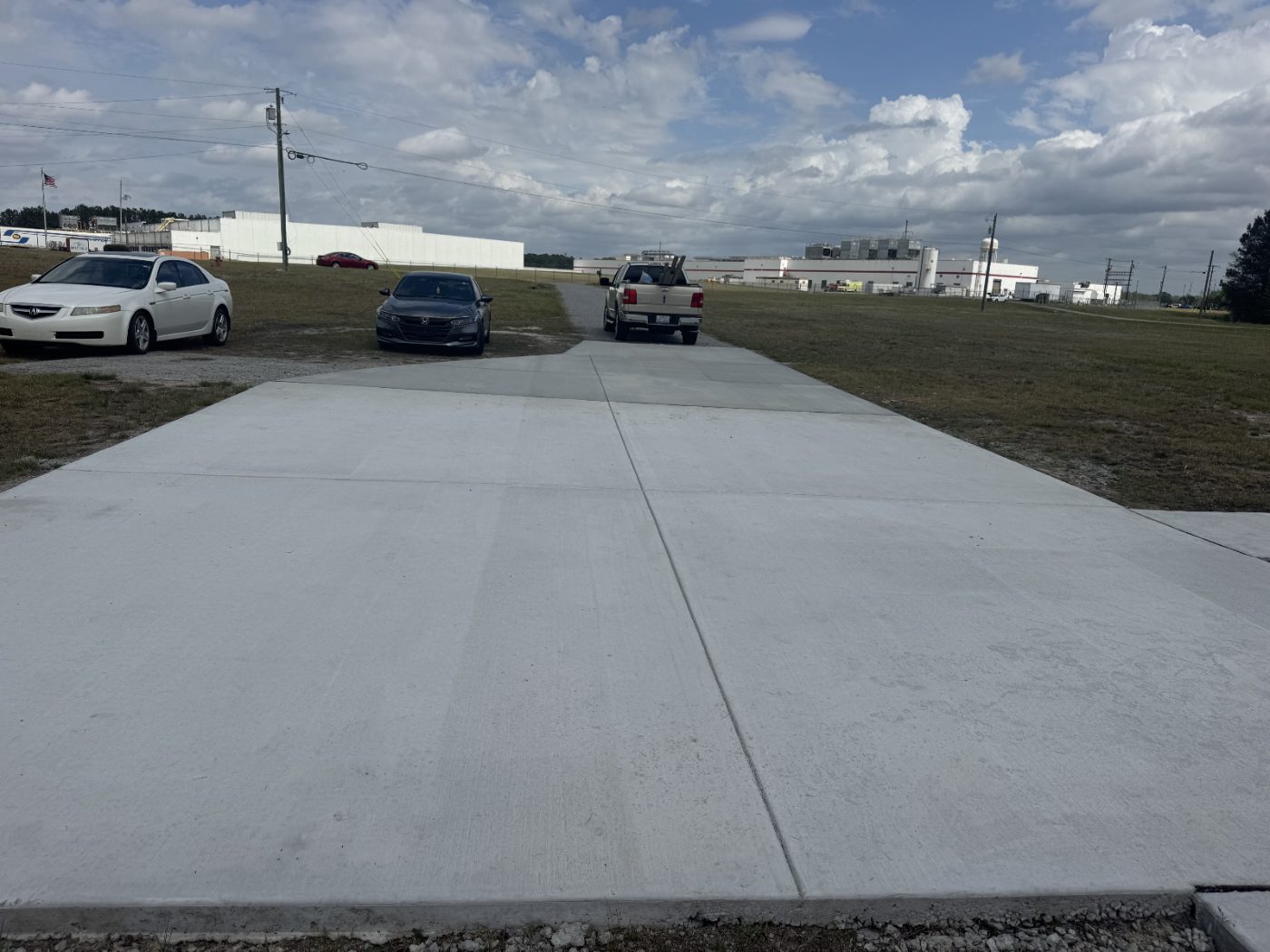 Concrete Foundations & SlabsFootings, foundations and slabs on grade over a compacted stone base, with steel sized to the load.View service
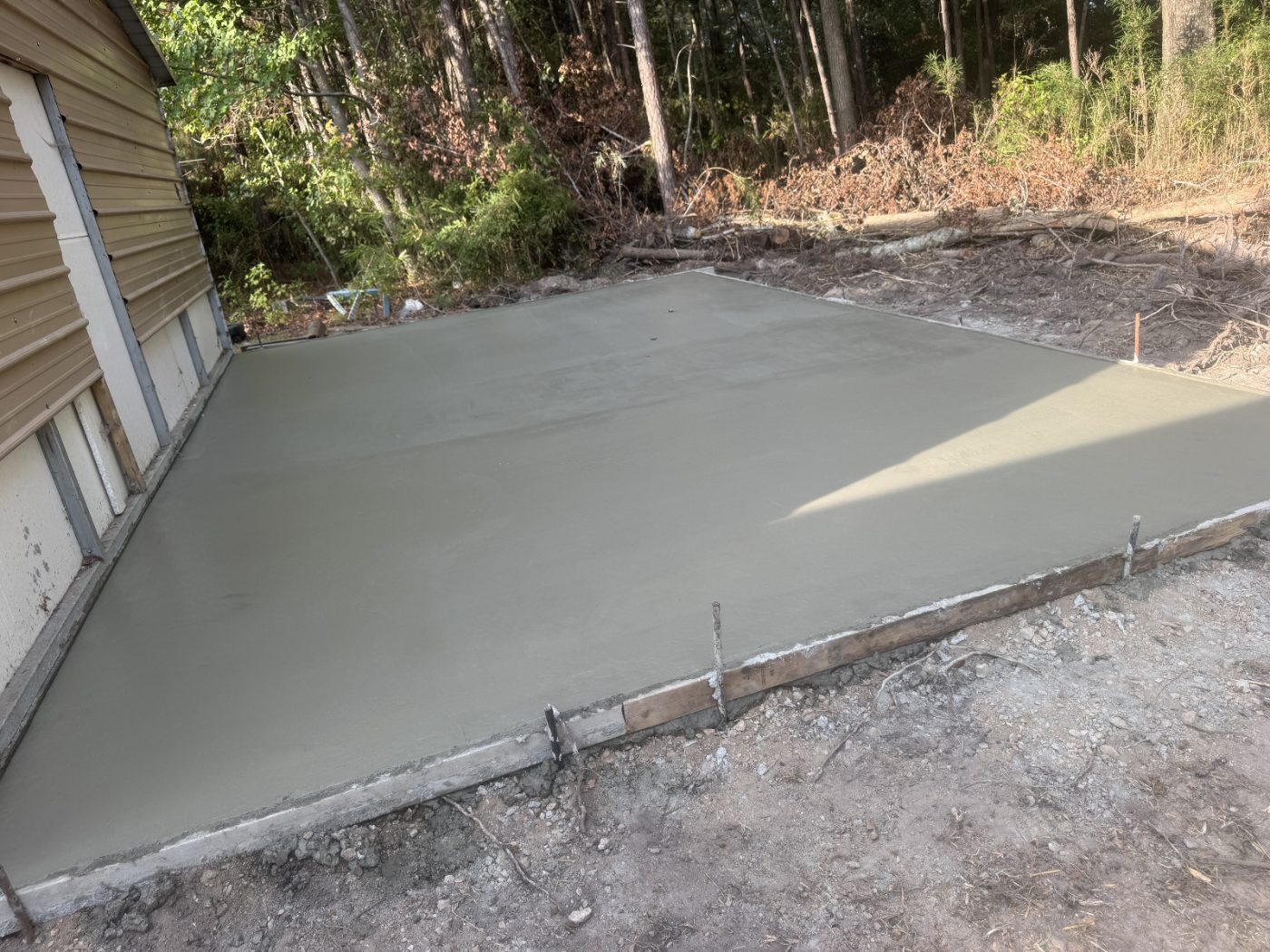 Garage Floor ConcreteGarage slabs poured level to the door, with joints placed to control where movement goes.View service
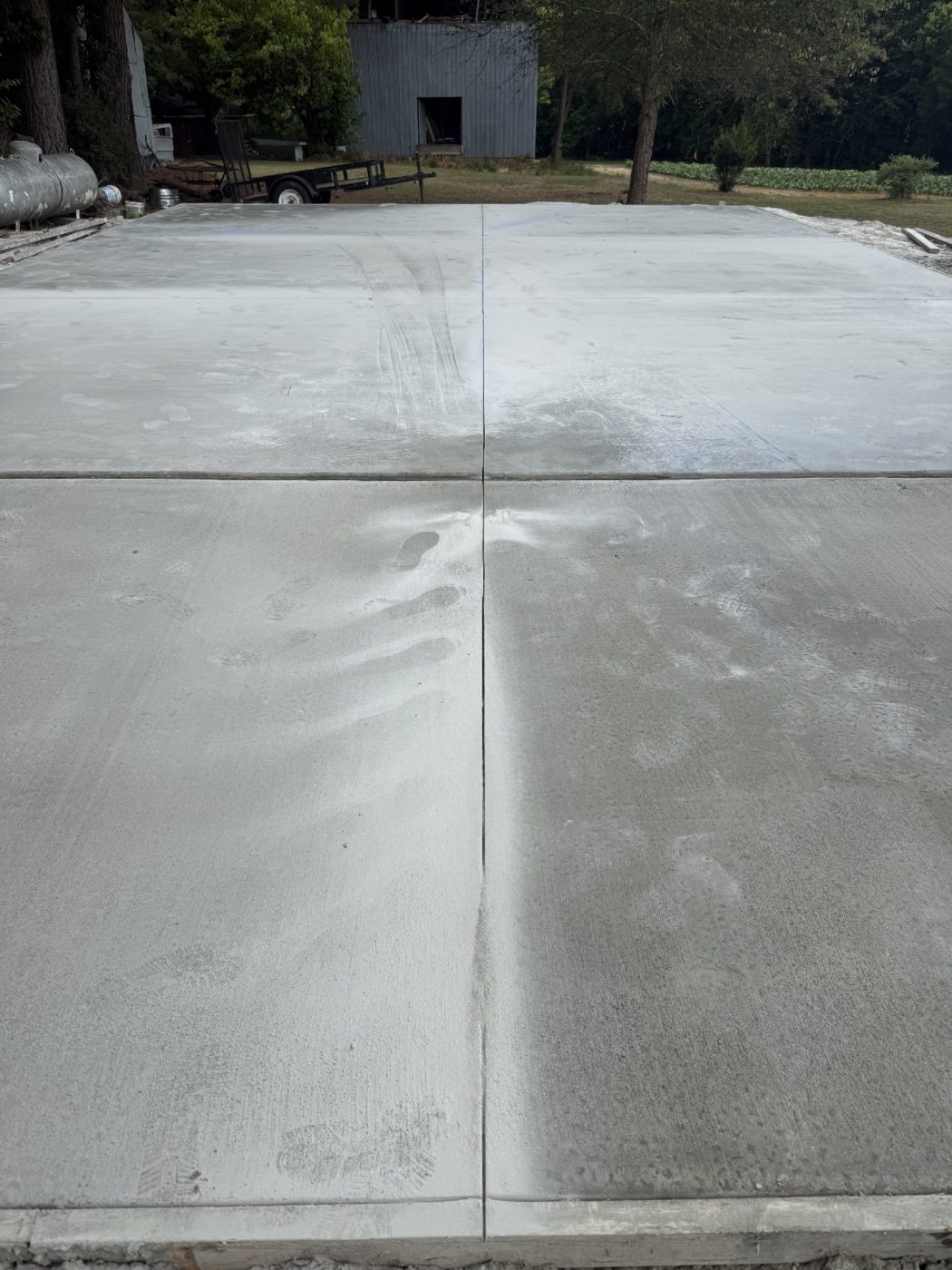 Concrete Floor InstallationInterior floors for shops, additions and outbuildings, screeded flat and finished smooth.View service
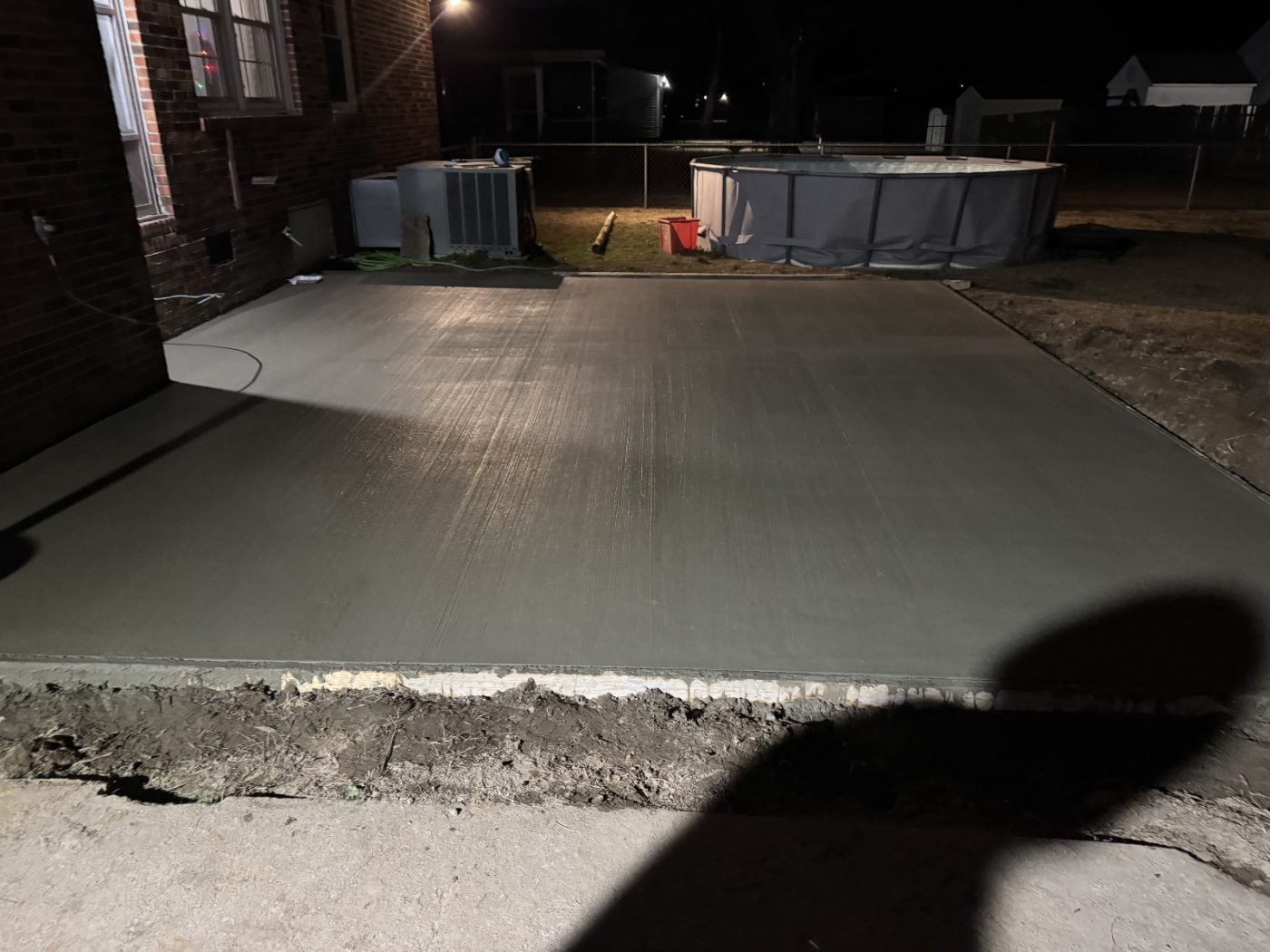 Concrete Pool DecksPool surrounds with slip-resistant finishes and drainage pitched away from the water.View service
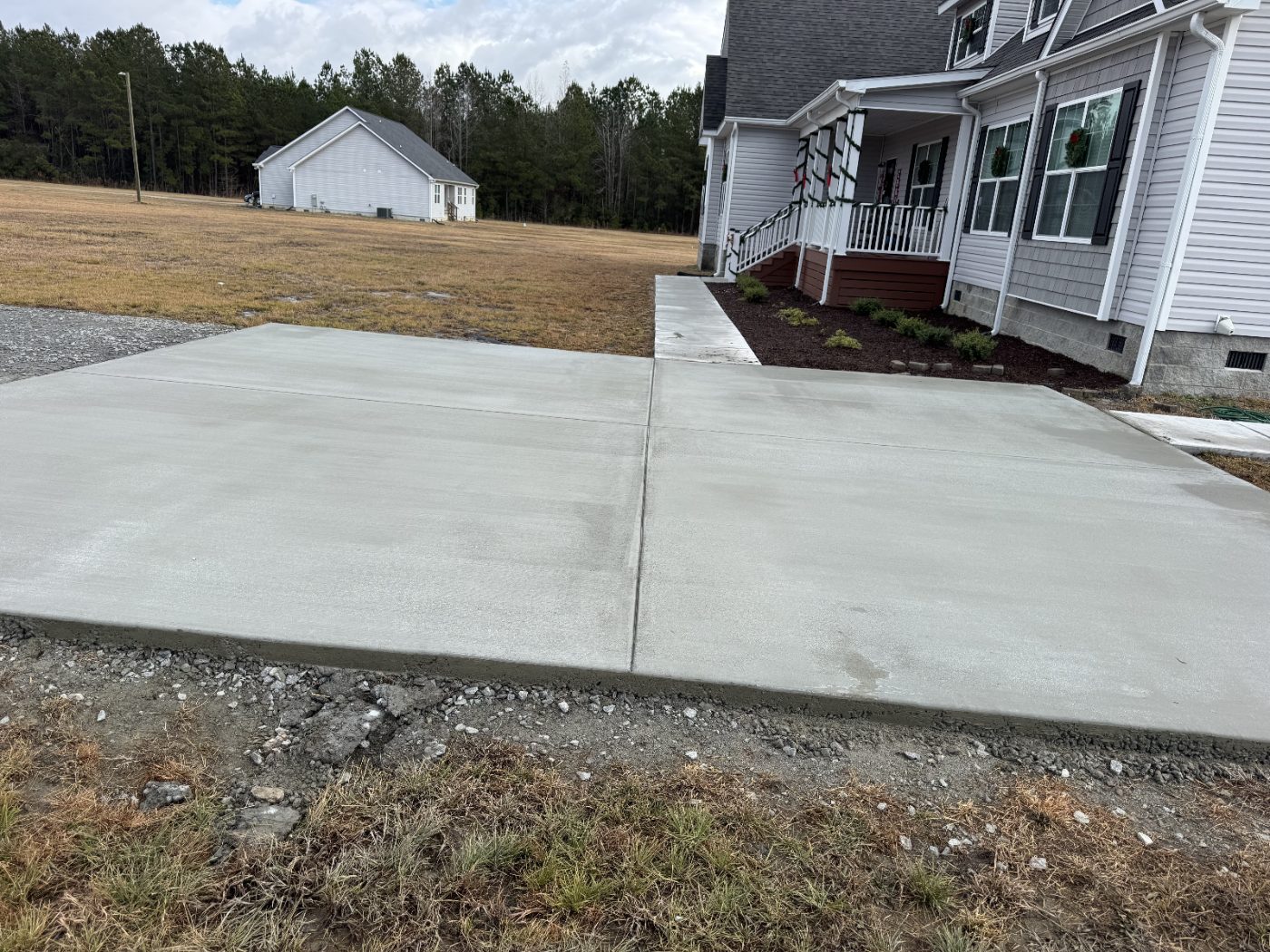 Concrete StepsPoured steps and landings formed to an even rise and run, tied into the walk or the porch.View service
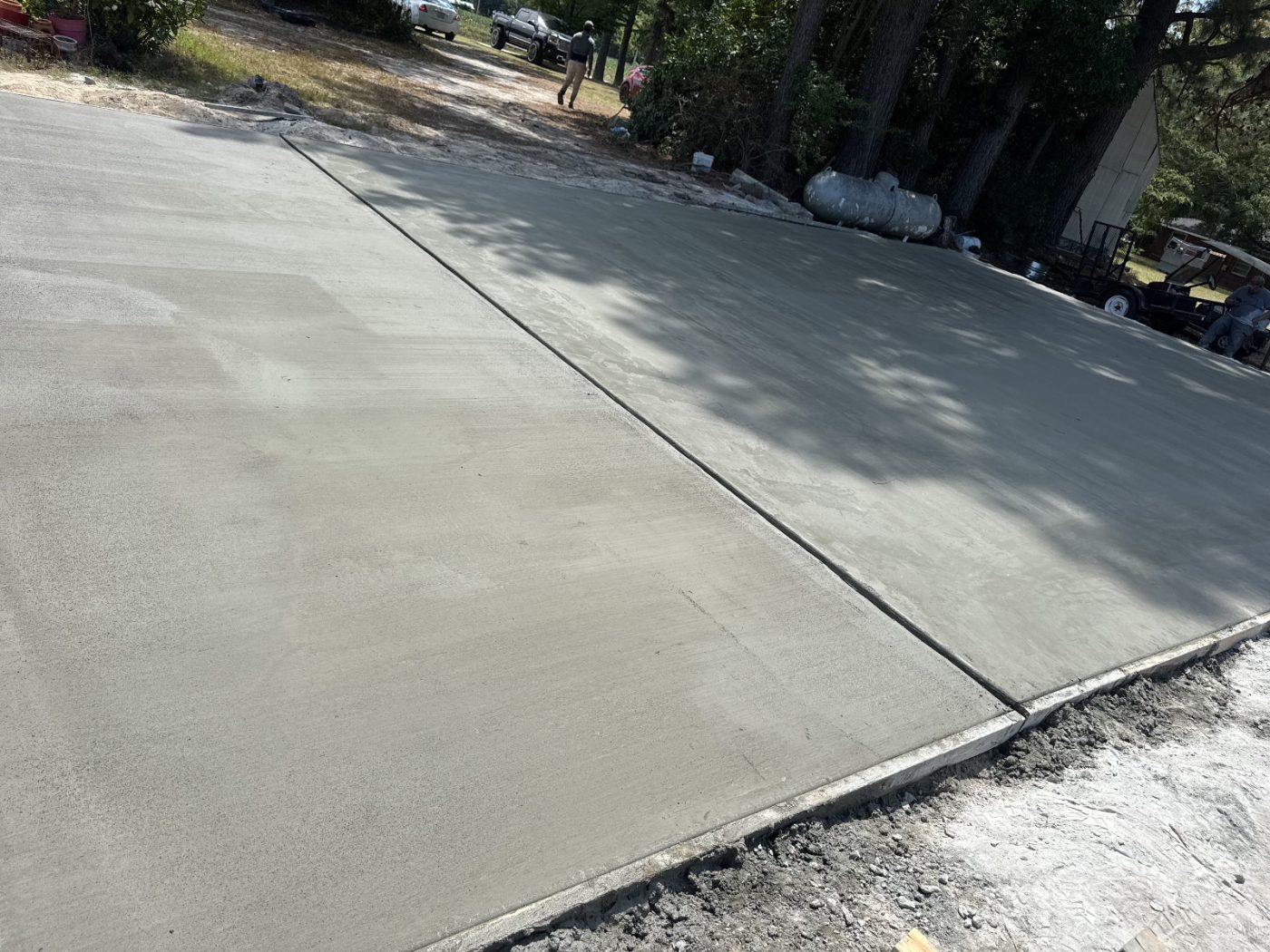 Concrete Parking LotsCommercial pads, lots and drive lanes built for truck loads and laid out for drainage.View service
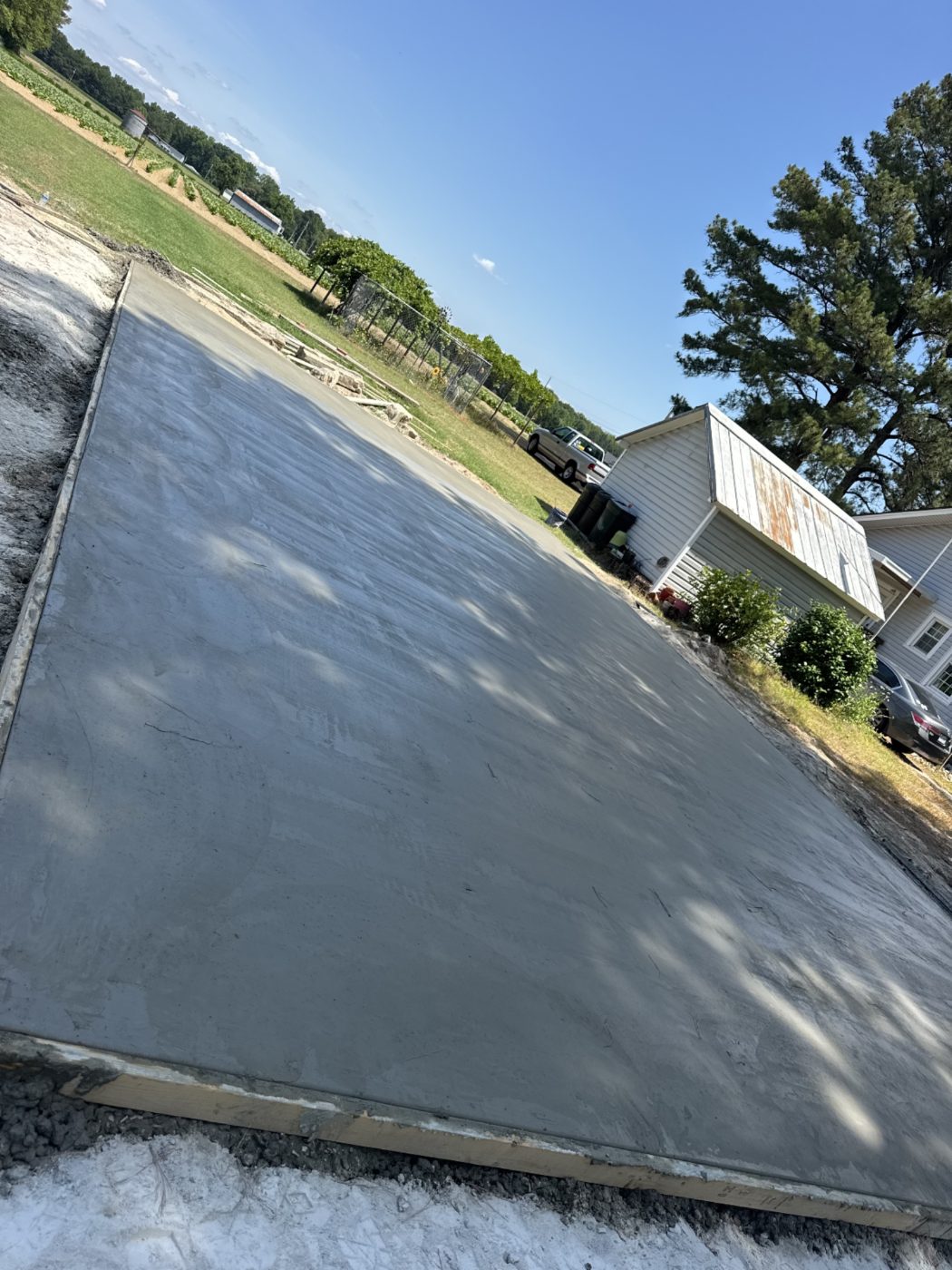 Concrete CuttingSaw cutting and removal for doorways, trenches, plumbing runs and section replacement.View service
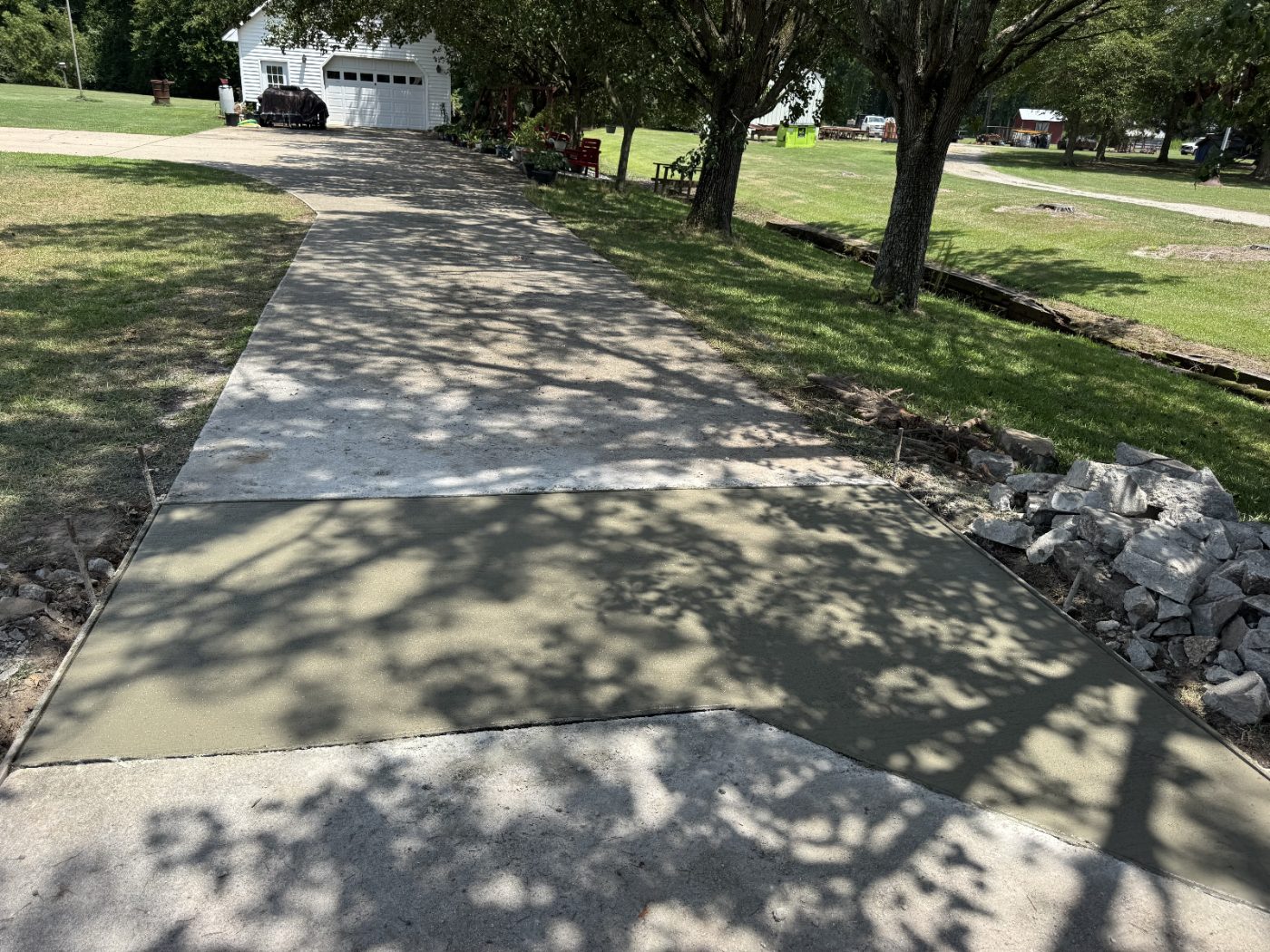 Concrete Repair and ReplacementCracked, settled or spalling concrete assessed first, then repaired or replaced with a reason given.View service
Foundation Raising questions we get in Wilson, NC
Look for a pattern rather than a single crack: stair-step cracking in block or brick, doors binding at one corner, a floor that slopes toward the same wall, and a gap opening between a porch and the house. If those line up on one side of the structure, it is worth an inspection.
Ready to price your foundation raising in Wilson, NC?
We come out, walk the job, and put the number in writing the same visit. Free, and no obligation.