Concrete practice is regional. What works on rock in the mountains is not what works on the coastal plain, and crews that learned the trade elsewhere sometimes find that out on a customer's driveway. Three things about this area drive nearly every decision we make on site.
Sandy loam over clay
Across Wilson, Nash, Wayne, Johnston and Pitt counties the typical profile is a sandy or loamy topsoil over a clay subsoil. The top layer drains, the clay does not, so water arrives at the interface and sits. Under a slab that means seasonal swelling and shrinking below and fines migrating out at the edges. The fix is not more concrete, it is excavating to firm ground and building a compacted stone base that lets water pass and spreads load.
A high water table and heavy rain events
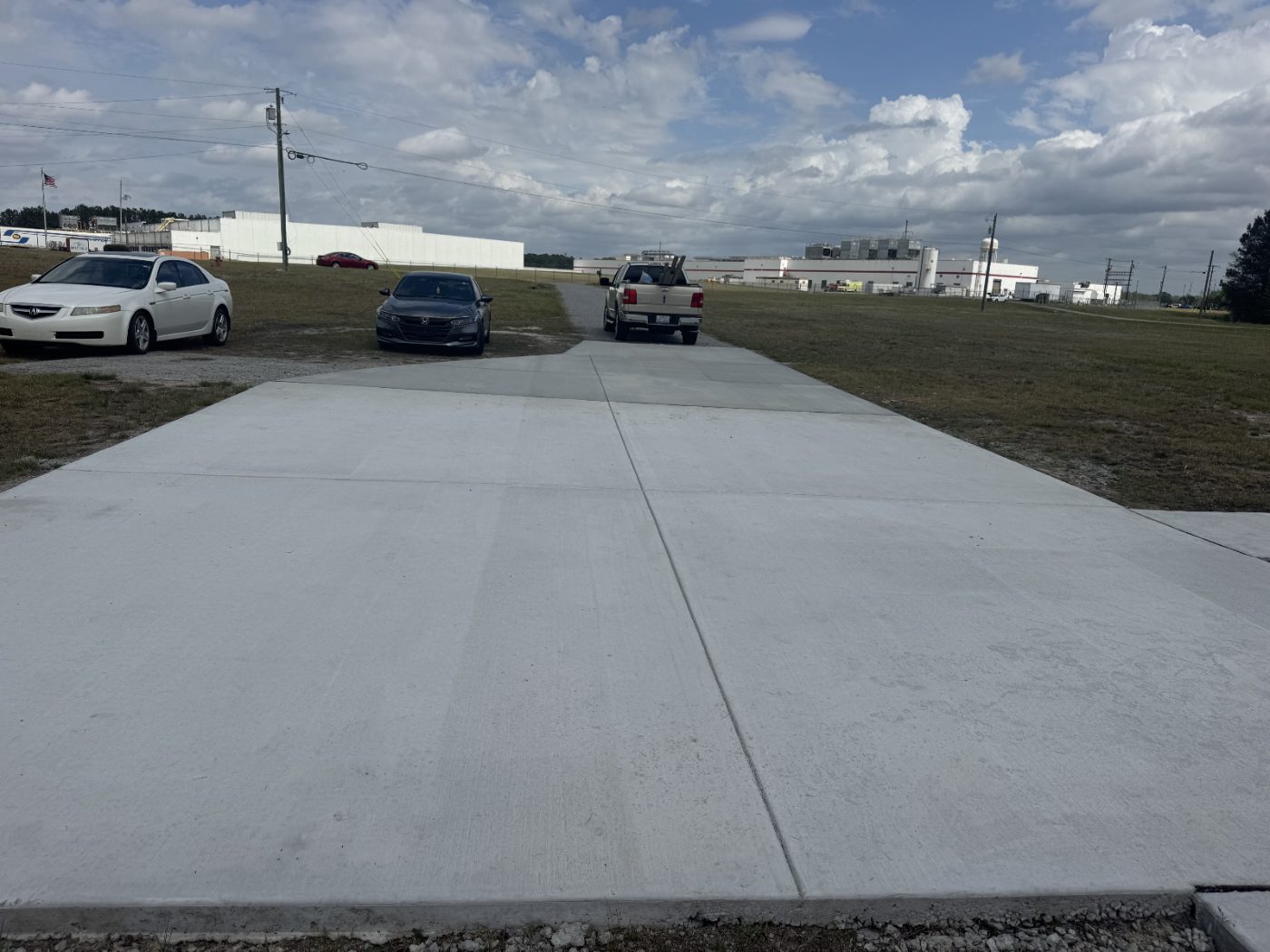
A lot of properties here sit within a few feet of the water table, and our rain comes in volume rather than drizzle: summer thunderstorms and tropical systems that drop several inches in hours. Every slab we pour gets a drainage plan, because "flat" is a finish, not a grade. Patios pitch away from the house. Pool decks pitch away from the water. Driveways get enough fall to move a downpour to the street without a river across the sidewalk.
A long, humid, hot summer
From June through September the working window is the morning. Heat and low humidity late in the day pull water out of the surface faster than it can rise from the slab, which causes plastic shrinkage cracking and a weak, dusty finish. We start early, keep the concrete covered, and cure it properly instead of trusting the humidity to do the job.
- Winter: we watch overnight lows and will not place concrete that freezes before it sets
- Spring and fall: the best pour weather here, and the busiest schedule
- Summer: early starts, wet curing or curing compound, no afternoon finishing in full sun
- Storm season: pours moved rather than placed into standing water